 Agents Available 24/7
The Best Ways to Manage Fungus Gnat Problems in Houseplants
These tiny flies known as fungus gnats thrive in moist soil and can harm houseplants by feeding on their roots and organic matter. In this article, learn how to identify, control these pests, and prevent infestations as well as moisture ant infestations.
- Fungus gnats are small flying insects that thrive in moist soil and cause significant damage to houseplants by feeding on root hairs, leading to yellowing leaves, stunted growth, and potential plant death.
- Early identification and effective management involve monitoring soil moisture, using yellow sticky traps and fly traps, and implementing biological control agents such as Bacillus thuringiensis subspecies israelensis (BTI), mosquito bits, beneficial nematode species, and diatomaceous earth.
- Preventing future infestations requires proper watering practices, using sterile potting soil free of decaying organic matter and leaf mold, covering soil surfaces, and regular monitoring of houseplants for signs of adult gnats and larvae.
Understanding the Pests
These small black flies are often mistaken for fruit flies or march flies. They are attracted to light and commonly seen hovering around windows indoors. Female fungus gnat adults lay tiny eggs in moist organic debris or potting soil. Each female can lay up to 200 eggs, leading to rapid population growth if not controlled.
The life cycle fungus gnats undergo includes four larval stages before adult gnats emerge:
- Fungus gnat eggs hatch into larvae
- Larvae feed on fungi, dead plant material, organic mulch, and root hairs
- Pupae develop near the soil surface
- Adult flies emerge and lay eggs, continuing the cycle
These insects thrive in moist soil conditions, especially where decaying vegetation and leaf mold are present. They tend to stay close to their breeding areas, which is why you’ll often see adults near the soil surface of infested plants. Understanding their life cycle and behavior helps in developing effective control strategies.
Identifying Infestations
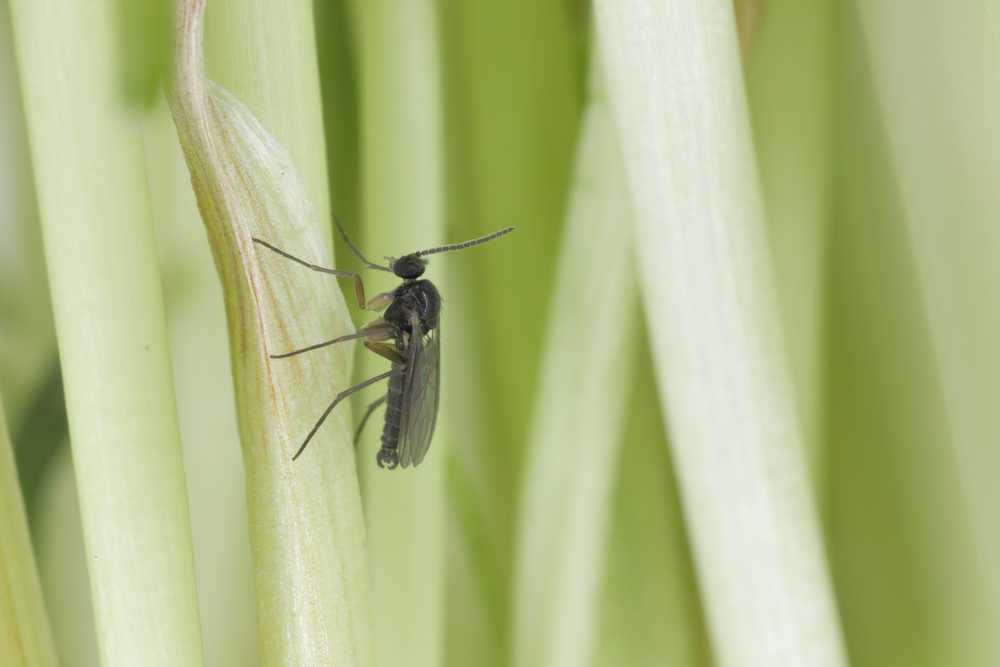
Early identification of a fungus gnat infestation is essential to prevent significant damage to your houseplants. Adult gnats are small, typically 3 to 4 mm long, with grey to black bodies and translucent wings featuring a distinct Y-shaped vein pattern. These adults are relatively weak fliers and tend to stay close to their breeding sites.
One of the first signs is seeing tiny black adult gnats flying around your potted plants or resting on surfaces where adults typically rest. Confirm the presence by observing the soil surface for tiny, white, worm-like larvae that eat organic mulch and decaying plant matter. Regularly inspecting the surface of your potting soil can help identify larvae before they cause damage.
Another simple method is to lightly tap the side of the pot and watch for adult fungus gnats emerge from the soil. Using yellow sticky cards, vinegar traps, or fly traps near infested plants can help monitor fungus gnat populations effectively.
Common Damage Caused
Fungus gnat larvae primarily feed on fungi, decaying organic matter, and root hairs of young plants. In high populations, they can cause significant fungus gnat damage by feeding extensively on plant roots, leading to yellowing leaves, stunted growth, wilting, and even plant death.
Although adult flies do not directly damage plants, their presence may indicate excessive moisture and decaying vegetation in the soil, which promotes populations and potential spread of plant pathogens such as Pythium. Addressing these issues maintains the health of your houseplants and prevents further damage. For more information on why flies invade homes, see this detailed guide.
Effective Control Methods
Effective control requires targeting multiple stages of the life cycle. Strategies such as drying out the soil, using yellow sticky traps, fly traps, and employing biological control agents can manage infestations and control fungus gnat larvae effectively.
Dry Soil Technique
One of the simplest and most effective ways to control these pests is to allow the soil surface to dry out between waterings. They thrive in moist soil, so drying the top inch of soil disrupts the life cycle by creating unfavorable conditions for fungus gnat eggs and larvae.
Consistently monitoring soil moisture and ensuring the soil dries sufficiently before watering reduces fungus gnat populations and prevents new infestations. This technique leads to healthier, pest-free houseplants.
Using Yellow Sticky Traps, Vinegar Traps, and Fly Traps
Yellow sticky traps and fly traps attract and capture adult fungus gnats, reducing their numbers and preventing females from laying eggs. Strategically placing these traps near infested plants maximizes capture and helps track the severity of infestations.
Vinegar traps, especially those made with apple cider vinegar, can also help attract and trap adults, complementing yellow sticky traps.
Regularly refreshing traps ensures continued effectiveness in controlling flying insects and monitoring adults. These traps are a non-toxic, easy-to-use solution that complements other control methods for optimal management.
Biological Control Agents
Biological control agents such as Bacillus thuringiensis subspecies israelensis (BTI), available in products like mosquito bits and mosquito dunks, and beneficial nematode species are highly effective in controlling fungus gnat larvae. BTI is a naturally occurring bacterium that kills larvae when ingested, without harming plants or beneficial organisms.
Beneficial nematodes actively seek out and destroy larvae in the soil, providing a natural and long-lasting control method. Applying these biological agents according to label instructions, often with repeated treatments spaced five to seven days apart, can significantly reduce larvae populations.
Diatomaceous earth is another natural option that can be sprinkled on the soil surface to control larvae by damaging their exoskeletons.
Combining biological control with dry soil techniques and sticky traps offers a comprehensive approach to control and prevents recurring infestations.
Preventing Future Infestations
Preventing infestations is crucial for maintaining healthy houseplants. These pests tend to thrive in damp environments with abundant decaying vegetation and organic debris. Proper watering, soil management, and regular monitoring help keep them at bay.
Proper Watering Practices
Avoid overwatering by allowing the soil to dry out between waterings. They are attracted to moist soil, so maintaining dry soil surfaces discourages egg-laying and larvae development.
Watering from the bottom or using well-draining sterile potting soil reduces excess moisture and problems. Healthy watering practices promote robust plant growth and prevent fungus gnat populations from establishing.
Soil Management
Use sterile potting soil free of decaying organic matter, leaf mold, and organic mulch to minimize breeding grounds. Avoid using incompletely composted materials that retain moisture and attract these flies.
Covering the soil surface with a layer of coarse sand or fine gravel can also deter females from laying eggs. Proper soil management creates an unfavorable environment and supports healthy plants.
Regular Monitoring
Regularly inspect houseplants for signs of adults and larvae. Use yellow sticky cards, vinegar traps, or fly traps near plants to monitor fungus gnat populations. Early detection allows timely intervention and prevents severe infestations.
Professional Help
For severe or persistent infestations, professional pest control services may be necessary.
Managing these pests involves understanding their life cycle, early identification, and combining effective control methods such as dry soil techniques, yellow sticky traps, vinegar traps, and biological control agents like BTI, mosquito bits, mosquito dunks, beneficial nematodes, and diatomaceous earth. Preventive measures including proper watering, soil management, and regular monitoring help keep houseplants healthy and pest-free.
For severe infestations, professional help ensures thorough control and long-term protection. Take action today to get rid of these pests and maintain a thriving indoor garden.
Frequently Asked Questions
Can they bite humans?
No, these insects are non-biting and harmless to humans.
What attracts them?
They are attracted to moist soil, decaying organic matter, leaf mold, and overwatered plants.
How do I identify an infestation?
Look for tiny black adults around plants, larvae on the soil surface, and use yellow sticky traps or vinegar traps to catch adults.
What is the most effective way to control them?
Combine drying out soil, using yellow sticky traps, vinegar traps, and fly traps, and applying biological control agents like BTI, mosquito bits, mosquito dunks, beneficial nematodes, and diatomaceous earth.
How can I prevent future infestations?
Maintain proper watering practices, use sterile potting soil without decaying organic matter, cover soil surfaces, and regularly monitor plants for pests.
"*" indicates required fields
"*" indicates required fields