 Agents Available 24/7
The Truth About Banana Spiders: Venom, Behavior, and Safety
Banana spiders, primarily found in warm regions such as Florida, fascinate many but are often misunderstood. Their large, strong webs and distinctive colors might seem menacing, but do they truly pose a danger? This article explores banana spiders’ behavior, habitat, venom potency, and safety concerns, providing all the essential details you need.
- Scientists classify banana spiders not as a single species but as a group of several species within the genus Nephila, especially Nephila clavipes, known as the golden silk orb weaver and one of the largest orb weavers in the western hemisphere.
- Despite their intimidating appearance with yellow spots and a large leg span, banana spiders produce mild venom that cannot seriously harm healthy adults; bites typically cause minor, non-serious symptoms.
- Female banana spiders spin large, intricate webs made of golden silk, which rank among the strongest webs built by any spider species.
- Professional pest control services effectively manage banana spider encounters through eco-friendly and comprehensive pest management strategies.
Understanding Banana Spiders
When you hear “banana spider,” you might picture large, menacing spiders lurking in banana shipments, but the reality proves more nuanced. People use the name ‘banana spider’ to describe various species in the genus Nephila, and it lacks a precise scientific classification. Many confuse these spiders with other species because different spiders share the same common name. To understand these fascinating creatures, examine their identifying features, habitats, and the various species included under this common name.
Banana spiders share similar traits and habitats. People often confuse them with other spiders, such as the black and yellow garden spider (Argiope aurantia), due to overlapping appearances. Recognizing their unique features helps distinguish them from other spiders and dangerous spiders like the Brazilian wandering spider.
Identifying Features of Banana Spiders
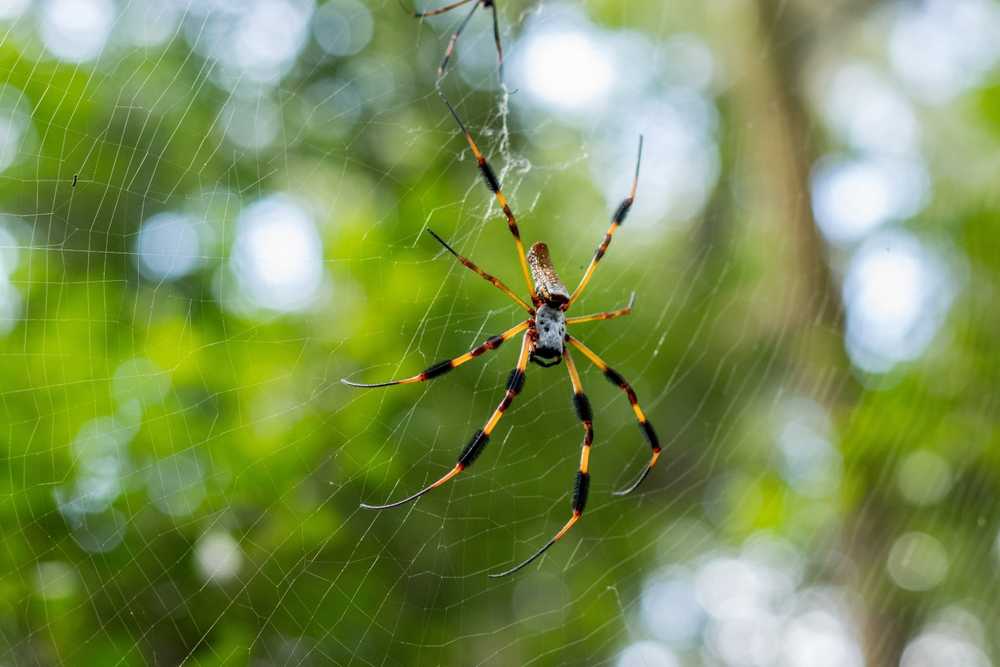
Banana spiders display distinct colors, primarily light brown or yellow with yellow spots, which help them stand out in their environment. Their bodies grow between 1 to 1.5 inches in length, and their leg span adds to their imposing silhouette. Female spiders, especially the female banana spider, have feathery tufts or gaiters on their legs, differentiating them from other spider species. Male banana spiders appear much smaller and less conspicuous.
Habitat in the Western Hemisphere
Banana spiders thrive in warm, humid climates, which explains their common presence in the southeastern United States, particularly Florida and the Gulf States, extending through Central America, South America, and the West Indies. They prefer secluded areas like open woods, dense forest edges, and low shrubs, so direct encounters with humans remain relatively rare.
These spiders build webs from eye level upwards into the tree canopy, attaching them to trees, low shrubs, or even utility lines. This strategic placement helps them catch flying insects effectively while avoiding predators.
Common Species
The name “banana spider” covers several species, each with unique characteristics and behaviors. The most commonly referenced banana spider bears the scientific name Nephila clavipes, also known as the golden silk orb weaver. People often confuse another species, the giant wood spider, with banana spiders. These species play vital roles in their ecosystems by controlling insect populations.
Golden Silk Orb Weaver (Nephila clavipes): The Classic Banana Spider Species
The golden silk orb weaver, Trichonephila clavipes, earns its name from its association with banana plants and its striking golden silk webs that resemble ripe bananas. These spiders inhabit areas from North Carolina to Texas along the Gulf States and throughout Central and South America. They build large, strong webs, sometimes three to five feet wide, ranking among the strongest webs built by any spider species.
Their webs stand out not only for their size but also for their unique golden color, which shimmers in sunlight and earns them the nickname “golden silk spiders.” Scientists believe this golden hue serves dual purposes: attracting prey by reflecting sunlight and camouflaging the web in shaded areas to avoid detection by predators.
Female banana spiders rank among the largest orb weavers in North America, with body lengths reaching up to three inches. Their striking coloration includes a silvery carapace with yellow spots on a muted orange to tan cylindrical body. Males appear much smaller, often less than half an inch, and darker in color.
Spider Species Often Mistaken for Banana Spiders
The giant wood spider impresses with its size and vibrant coloration, including yellows and blacks. Females typically grow larger than males, a trait common among many spider species. These spiders prefer tropical and subtropical environments, often inhabiting dense vegetation near water sources. Like the golden silk orb weaver, they build large webs to capture flying insects.
People often confuse several species with banana spiders due to similar appearances. The black and yellow garden spider (Argiope aurantia) frequently gets mistaken for a banana spider, but has a more rounded abdomen. The Hawaiian garden spider, with distinctive markings, also sometimes gets confused with banana spiders. Importantly, golden silk spiders lack the red jaws characteristic of the more dangerous Brazilian wandering spiders.
Besides the golden silk orb weaver and giant wood spider, people sometimes refer to writing spiders as banana spiders due to their intricate web patterns. Note that the term “banana spider” serves as a common name applied to several different species, which can be confusing.
Venom and Safety Concerns
Many people worry about banana spiders’ venom. However, experts do not consider banana spiders dangerous to humans. They use venom mainly to immobilize prey, which consists mostly of flying insects, and their venom poses little risk to humans.
Banana spiders produce mild venom that generally poses no harm to humans. Their venom cannot cause serious injury to healthy adults, and bites cause pain comparable to a bee sting, accompanied by slight redness and swelling. Symptoms usually resolve quickly without medical care.
Bite Symptoms and First Aid
If a banana spider bites you, expect localized pain, redness, and mild swelling. These symptoms remain mild and usually do not require medical attention unless complications arise. Clean the bite area with soap and water, apply ice to reduce swelling, and keep the affected area elevated.
Preventing banana spider bites matters, especially for individuals with spider phobias or allergies. Wear protective clothing like long sleeves and pants when working in areas where banana spiders live. Avoid dense forest areas and woodpiles to reduce encounters.
Web Construction and Hunting
Banana spiders build strong webs with golden silk that surpasses even Kevlar in strength. These webs trap a variety of flying insects, which form their primary diet.
How Female Banana Spiders Build Their Strong Webs
Female banana spiders spin complex webs with non-sticky strands serving as barriers and sticky spirals to capture prey. The golden silk’s color camouflages the web in shaded areas and attracts flying insects in sunlit spots.
These webs can span three to five feet in diameter and rank among the largest and most durable orb webs built by any spider species. Banana spiders build these webs in mid-summer when insect activity peaks, maximizing their chances of catching prey.
Diet and Hunting Techniques
Banana spiders prey mainly on flying insects such as mosquitoes, moths, and flies. After trapping prey in the web, the spider paralyzes it with venom before wrapping it in silk. This hunting technique helps control insect populations and maintain ecological balance.
Interestingly, banana spiders avoid certain insects like cockroaches, possibly due to the cockroach’s size and quick movements.
Fascinating Facts
- Banana spider silk exhibits incredible strength and flexibility, surpassing even Kevlar in tensile strength. Scientists study it for potential applications in materials science and medicine, including biodegradable sutures and tissue engineering.
- The silk also possesses antibacterial properties, which researchers explore for medical uses.
- Banana spiders demonstrate sexual dimorphism, with females significantly larger and more colorful than males. This difference influences mating behaviors and web-building.
- These spiders appear in popular culture and media, sometimes inaccurately, highlighting their intriguing presence in human imagination.
- Banana spiders constitute the only species in the genus Nephila found in the western hemisphere, distinguishing them from related orb weavers elsewhere.
- The female spins the golden silk web, which serves both functional and aesthetic purposes, contributing to the spider’s reputation.
- The golden silk orb weaver has earned recognition for its impressive web strength, including mentions in the Guinness World Records.
Prevention and Professional Pest Control
Encountering a banana spider can startle you, but understanding how to manage these encounters can ease your concerns. Banana spiders bite only if provoked.
To minimize bite risk:
- Wear gloves and protective clothing when working outdoors in areas where banana spiders live.
- Remove ground litter and trim tall grass to reduce their habitat.
- Regularly clear webs from around your home and yard.
- Seal cracks and crevices around buildings to prevent spiders from entering indoor spaces.
- Reduce outdoor lighting that attracts flying insects, thereby decreasing the food source for banana spiders near homes.
Professional pest control services effectively manage banana spider populations. Their integrated pest management approach includes inspection, targeted treatments, and ongoing prevention to keep properties safe and pest-free.
Banana spiders, with their striking appearance and fascinating behaviors, play important roles in their ecosystems. Their venom remains mild and poses little threat to humans. Understanding their habits, identifying features, and safety measures helps reduce fear and promote coexistence.
Professional pest control services effectively manage banana spider encounters, ensuring homes remain safe and pest-free.
Frequently Asked Questions
Are banana spiders dangerous to humans?
No, banana spiders pose no danger to humans. Their venom remains mild, and bites usually cause only minor symptoms similar to a bee sting.
How can I prevent banana spider bites?
Wear protective clothing and avoid dense vegetation where banana spiders build their webs. Regular yard maintenance also helps reduce encounters.
What should I do if I get bitten by a banana spider?
Clean the bite area with soap and water, apply ice to reduce swelling, and monitor symptoms. Seek medical care if severe reactions occur.
What are the benefits of professional pest control services for banana spiders?
Professional pest control ensures effective management and long-term prevention of spider infestations, providing peace of mind and a safer home environment.
Does PURCOR offer specialized pest control services for banana spiders?
Yes, PURCOR provides specialized indoor treatments and free re-treatments for covered pests, ensuring ongoing protection against pests including banana spiders.
"*" indicates required fields
"*" indicates required fields