 Agents Available 24/7
Cow Ant: Behavior, Sting, and Control Methods
Velvet ants, also known as cow killer ants or cow ants, are cool looking insects that are actually wasps. They’re known for their painful sting, so here’s how to identify them, where they live and what they eat, and how to control them.
- Velvet ants, or cow ants, are solitary wasps with wingless females and winged males, with bright warning coloration and a painful sting.
- They prey on and parasitize other insects, feeding on nectar and laying eggs in the larvae of ground nesting bees.
- Control methods for velvet ants include specialized insecticides, landscaping modifications and professional pest control services like Purcor Pest Solutions.
What are Cow Ants
Velvet ants, sometimes called cow ants or cow killer ants, are pretty cool. Recognition is easy once you know what to look for. Female velvet ants are wingless and hairy, so they look like little furry ants. They look like ants but they’re actually wasps. Male cow ants have wings and can fly, so you might easily mistake them for other types of wasps.
In terms of color, these insects are hard to miss. They come in a range of bright colors from black with red or orange patches to yellow and white. This coloration warns predators about their painful sting. They’re also big, up to 3/4 inch long, so you’ll notice them among other stinging insects.
The males can fly and often get mistaken for other types of wasps, but the females are wingless and stay on the ground. Knowing the differences between males and females helps with identification. Whether you’re dealing with a wingless female or a flying male, recognizing these traits will help you identify these insects in your yard. Velvet ants, scientifically known as Dasymutilla occidentalis, also go by cow killer ants or red velvet ants. Despite their name, they’re not true ants but wasps. They belong to the family Mutillidae which has over 7,000 species of solitary wasps, making velvet ants pretty fascinating insects.
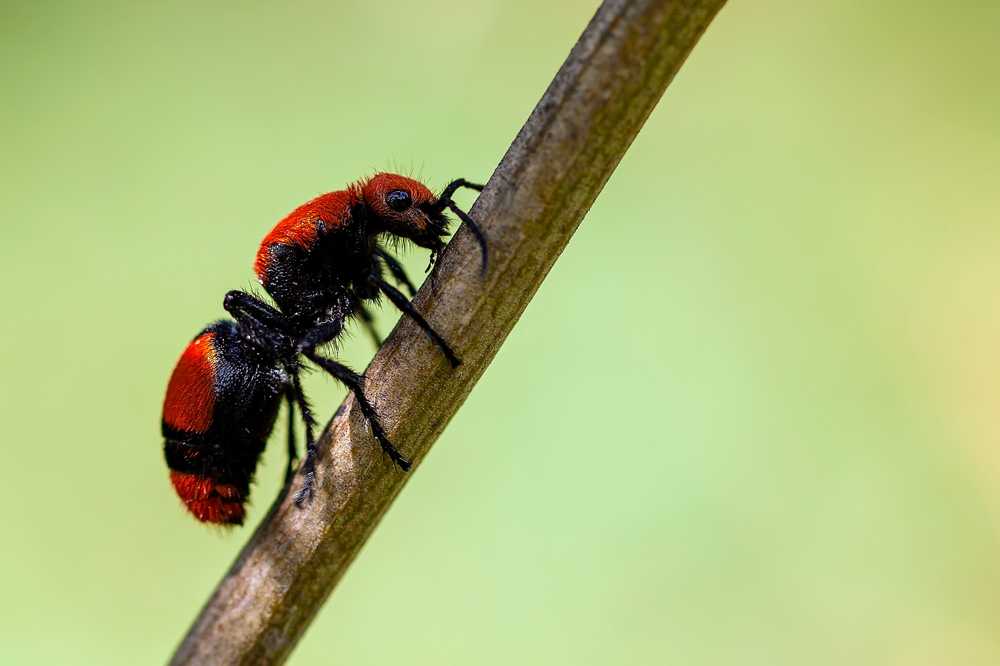
One of the most noticeable features is their appearance. They’re black with patches of bright orange-red hair, hence their bright and alarming coloration. This coloration warns predators about their painful sting. True ants form colonies, but cow killer ants act alone; they don’t create nests or work as a team.
Knowing that cow killer ants are wasps clarifies their behavior and life cycle. These solitary stinging insects relate to wasps, not ants. This helps with identification and understanding their ecological role and impact.
What do Cow Killer Ants Look Like
Cow killer ants look as distinctive as they are alarming. They’re black but have bright orange-red hair on their thorax and abdomen. Their bright colors make them easy to spot and warn predators of their painful sting.
Female cow killer ants are big and noticeable. They’re wingless and can be up to 3/4 inch long. Their bodies are hairy so they look like little furry ants. They look like ants but they’re actually wasps.
Male cow killer ants have wings and can’t sting, which makes them very different from the females. They look more like wasps than their wingless female counterparts. Knowing the difference between males and females is key to identification and understanding their behavior.
Habitat and Range
These insects inhabit many habitats, from pastures and forest edges to urban and suburban areas. In urban areas, you often see them in lawn vegetation and sometimes entering garages. They tolerate many climates and environments, which contributes to their nickname cow killers.
Geographically, they range across a large part of the US. They appear from Florida to Connecticut and west to Texas and Missouri. Many people across the country will see these cool insects in their yard.
Behavior and Diet
These insects are as interesting as they look. They feed on nectar, which they extract from flowers using their specialized stingers. In addition to feeding on nectar, they parasitize ground nesting bees.
They also prey on larvae and adult insects like flies, beetles and bees. This diet sustains them and helps control other insect populations in their habitat. Their predatory and parasitic behavior makes them fascinating and beneficial in some ecological contexts.
You can observe them foraging for nectar during the day. Their active feeding habits and bright coloration make them easy to spot as they move from flower to flower, pollinating while meeting their nutritional needs.
Reproduction and Life Cycle
The reproduction and life cycle follow a parasitic strategy. Female cow ants don’t build their own nests; instead, they lay eggs in the larvae of ground nesting bees. After mating, the female searches for a bee nest to lay her eggs.
Once she finds a host, the female punctures the host’s cocoon and lays her egg inside. Their larvae consume the host’s mature larva or pupa, effectively hijacking the host’s resources. This is a fascinating example of nature’s brutal methods of survival.
As the larvae develop, they go through several larval stages before emerging as adults. The larvae consume the host’s resources, eventually forming a pupal case where they undergo metamorphosis into adult ants. This life cycle ensures they continue to thrive and propagate their species.
The Painful Sting of Cow Ants
One of the most notorious things about these insects is their sting. Female cow ants deliver a very painful sting often described as agonizing. It rates a 3 out of 4 on the Schmidt Pain Scale, significant but not lethal pain. This high pain rating strongly deters predators.
The sting serves as a defense mechanism. Despite their reputation, they don’t act aggressively and tend to avoid confrontation unless provoked. Their hard exoskeleton allows them to sting multiple times if threatened, making them formidable opponents for any predator or unwary human.
To avoid the sting, leave them alone and educate children to stay away. If you encounter them indoors, trap them carefully to avoid direct contact. Taking these precautions prevents painful encounters and allows humans and ants to coexist peacefully.
During warm summer months when they become most active, stay vigilant. Their bright coloration and active foraging habits make them easy to see, but their sting’s potential pain makes them creatures to observe from a distance. Respect their space and observe their behavior to avoid painful stings and appreciate them from afar.
Cow Ant Control
Controlling these insects proves difficult due to their resilience and solitary behavior. One method involves using insecticides specifically formulated for wasp control. These insecticides penetrate the hard exoskeleton and act effectively. Also, modifying landscaping by adding dense mulch or ground cover deters them as they prefer sandy areas with little vegetation.
Professional pest control services offer the best solution for infestations. PURCOR Pest Solutions provides a range of pest control services for residential and commercial properties. Their service technicians use advanced pest control technology to ensure safety and efficacy in pest removal while minimizing environmental impact through sustainable practices.
PURCOR Pest Solutions also educates customers about effective pest management and its importance to public health. By choosing PURCOR you can rely on a team that keeps your property pest free while supporting local economies and using environmentally friendly methods.
Frequently Asked Questions
What are cow ants?
Cow ants or red velvet ants are not ants but wasps from the Mutillidae family. Their appearance and sting have earned them the name “cow killer”.
How can I identify a cow ant?
To identify a cow ant, look for wingless females that are hairy and brightly colored red, orange, yellow or white; males have wings and can fly.
Where are cow ants found?
They inhabit pastures, forest edges and urban areas from Florida to Connecticut and westward to Texas and Missouri.
Why is the sting of cow ants so painful?
Female cow ants deliver a sting so painful because their venom rates 3 out of 4 on the Schmidt Pain Scale, an effective defense mechanism against predators.
How do I control a cow ant infestation?
To control an infestation, use insecticides for wasp control and modify your landscaping. For best results, hire professional pest control services.
"*" indicates required fields
"*" indicates required fields