 Agents Available 24/7
Dirt Daubers: A Gentle Wasp You Can Live With
Dirt daubers, also known as mud daubers, are solitary wasps that build mud nests and do not act aggressively. They catch spiders and rarely sting humans. In this article, you’ll learn how to identify dirt daubers, understand their lifecycle, recognize different types, appreciate their benefits, and manage their nests if needed.
- Dirt daubers, or mud daubers, are solitary wasps known for their non-aggressive behavior and mud nesting habits.
- The lifecycle of mud daubers includes several stages, from egg to adult, with larvae feeding on paralyzed spiders that adult wasps provide.
- Mud daubers help control spider populations, making them a good pest management option in human environments.
Identifying Dirt Daubers
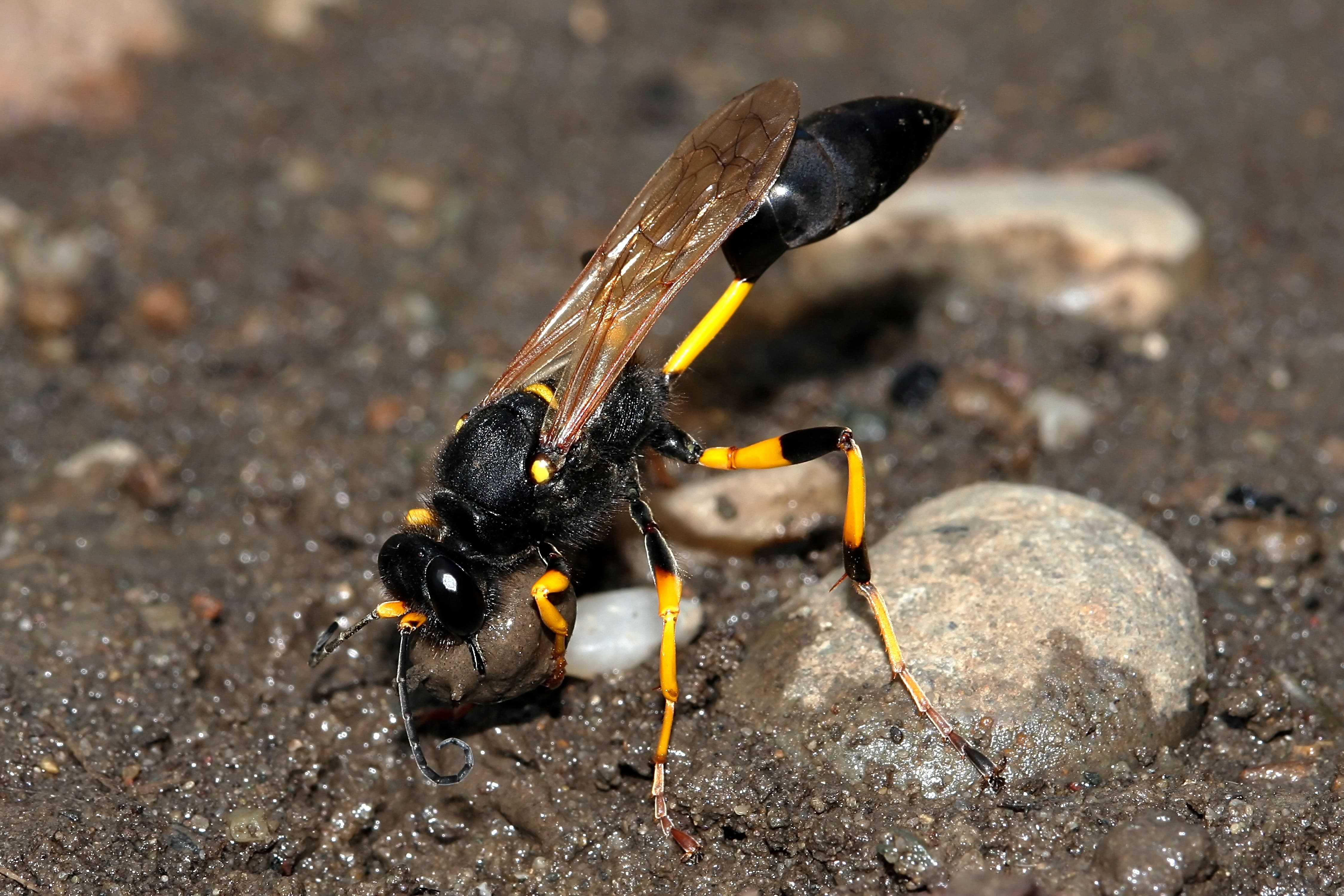
Mud daubers are fascinating insects that you can identify by their unique features. Mud dauber wasps usually measure half an inch to over an inch long, about 12 to 25 mm. They range from glossy black to shiny blue, making them very distinctive among dirt daubers.
A distinctive feature of dirt daubers is their slender waist between the thorax and abdomen, a key identifier that sets them apart from other wasps and gives them an elegant appearance.
Dirt daubers have six legs and wings that can be clear or dark. Their slim waist, coloration, and wing pattern make them easy to spot, like finding a gem in your backyard, reminding us of nature’s awesomeness.
What Are Dirt Daubers?
Dirt daubers, also called mud daubers, are solitary wasps known for their nest building and non-aggressive behavior. Unlike social wasps, they do not defend a colony, so humans face less chance of aggressive encounters. Being solitary, dirt daubers often work alone on their mud nests.
Generally gentle, dirt daubers prefer to avoid human contact. They usually focus on collecting mud and catching prey rather than defending territory, so you can safely have them around even if they are predators.
A cool thing about dirt daubers is their nest building behavior. They build nests from mud in sheltered areas like barns and roof eaves. These multi-celled mud dauber nests show their industrious nature and solitary lifestyle.
Several types of dirt daubers show unique characteristics and nesting habits. The iridescent blue mud dauber (Chalybion californicum) displays striking iridescent blue-black coloration.
Another type, the black and yellow mud dauber (Sceliphron caementarium), builds globular mud nests with one to several cells. Their nests consist of short and side-by-side tubes, showing their unique construction.
Pipe organ mud daubers (Trypoxylon politum) build nests that look like long parallel mud tubes, often called organ pipes and mud tubes. They provision these nests with spiders, demonstrating their role as natural predators. Each pipe organ mud dauber species has unique traits.
Dirt Dauber Nests
Mud daubers act as master builders, using mud to create intricate mud dauber nests and mud nests that serve as homes and nurseries for their young. They collect mud and shape it into individual mud balls and cells.
You find these nests in sheltered areas like eaves, porch ceilings, and garages, where the wasps protect their young dirt daubers from the elements.
After mating, a female mud dauber builds tubes from mud to lay one egg and store paralyzed spiders for the larvae. Round holes in the nests mark where wasps have emerged, leaving behind old nests that no longer serve active wasps. This building, provisioning, and emerging cycle illustrates their nesting behavior.
Lifecycle of a Dirt Dauber
The lifecycle of a dirt dauber progresses from egg to adult. Adults emerge in late spring or early summer after overwintering in cocoons, marking the start of their active period for mating, nest building, and provisioning for offspring.
Mud dauber larvae feed on paralyzed spiders that adult females provide. After eating the spiders, the larvae enter the pupal stage, build a cocoon, and remain dormant through winter, which is crucial for their development before they emerge as adults.
The lifecycle includes eggs, larvae, pupae, and adults, each stage critical for the species’ survival and propagation, showing nature’s balance.
Do Dirt Daubers Sting?
A common question about dirt daubers is if they sting. The good news is they do not act aggressively and sting only when threatened, so they rarely sting humans during everyday encounters. Their venom is mild, making dirt daubers relatively harmless compared to other stinging insects. This allows us to coexist with them peacefully.
Benefits of Having Dirt Daubers Around
Mud daubers control spider populations, making them beneficial insects. Female mud daubers capture and paralyze spiders for their larvae, reducing the presence of harmful spiders like black widow spiders around human habitats.
Dirt daubers act as natural predators, managing spider populations and keeping harmful species like black widows in check, offering pest control benefits.
Female mud daubers can pack each nest cell with 25 to 30 spiders, totaling over 500 spiders per nest, showing their role as natural pest controllers and service to human environments.
How to Manage Dirt Daubers
While beneficial, you may sometimes need to manage or remove dirt dauber nests. Removing nests in the evening when wasps are less active improves safety.
DIY Mud Dauber Nest Removal
If you prefer DIY, you can safely remove dirt dauber nests by taking precautions. Wearing protective gloves and long sleeves minimizes skin contact. Using a strong stream of water can dislodge the nests without harming the wasps.
A paint scraper can gently detach the nest from surfaces without causing damage. Alternatively, you can use a vacuum with a long hose for nest removal, a safe and efficient method.
Removing nests during inactive periods, like nighttime or colder months, reduces the risk of disturbing the wasps and makes the process smoother.
Professional Pest Control Services
For professional help, companies like PURCOR Pest Solutions manage dirt dauber nests. They provide thorough inspections and customized solutions, handling infestations safely and effectively.
Professionals assess the extent of the infestation and provide tailored strategies for nest removal and prevention, removing nests without harming humans or the environment.
Dirt daubers are gentle wasps that play a big role in controlling spider populations. Their non-aggressive nature and unique nesting behavior make them fascinating creatures we can coexist with. By knowing how to identify, appreciate, and manage them, we can maintain a harmonious relationship with these beneficial insects. Next time you see a mud dauber or its nest, remember the good they do for our environment. Accept their presence as natural pest control and nature’s balance.
Frequently Asked Questions
Do mud daubers sting?
Mud daubers generally do not act aggressively and sting only if threatened or mishandled. Stings are rare, and their venom causes minimal symptoms.
Are mud daubers as aggressive as wasps?
Mud daubers do not behave aggressively like wasps and typically do not sting even when provoked. However, exercise caution around their nests as other wasp species may inhabit the area.
What’s the difference between dirt dauber and mud dauber?
The main difference is that dirt daubers often act as nuisances while mud daubers, which stock their nests with caterpillars and spiders, serve as beneficial insects. Mud daubers play a positive role in pest control compared to dirt daubers.
Will a dirt dauber sting me?
Dirt daubers generally do not act aggressively and will sting only if provoked. Just leave them alone to avoid any stinging.
What are dirt daubers?
Dirt daubers or mud daubers are solitary wasps known for their non-aggressive nature and mud nesting behavior. They can benefit humans by controlling pest populations.
"*" indicates required fields
"*" indicates required fields