 Agents Available 24/7
EEffective Ways to Get Rid of Grub Worms in Your Lawn
Grub worms, the larvae of beetles like June bugs and Japanese beetles, cause severe damage to lawns by feeding on grass roots. Recognizing the signs of a grub worm infestation early is crucial for effective control of grub worm strategies. In this article, we’ll guide you through identifying, preventing, and managing these destructive pests.
- These larvae, often called white grub worms, are the immature stage of various grub species of beetles and can severely damage lawns by feeding on grass roots, particularly in their larval stage.
- Early identification of these pests and signs of infestation, such as brown patches and increased animal activity, is crucial to prevent grub worms and manage grub worm damage.
- Implementing preventive measures, maintaining a healthy lawn, and utilizing professional pest control services can significantly reduce grub infestations.
Understanding Grub Worms
Grub worms, often referred to as lawn grubs, white grubs, or turf grubs, are the larval form of beetles such as June bugs, Japanese beetles, and European chafers.
These pests go through four distinct life stages:
- Eggs hatch in the soil after female beetles lay their eggs.
- Larva (the grub worm stage) where they feed on grass roots.
- Pupa
- Adult beetles emerge from the soil.
The larval stage is the most destructive. In this stage, lasting from weeks to months, these larvae feed on lawn grass roots underground, causing significant grub worm damage.
The damage caused by these insects is substantial and can result in unhealthy, brown patches across your lawn, particularly in late summer and early fall when they are most active. Understanding the lifecycle and behavior of these pests is the first step in effective grub worm control.
Identifying the Larvae
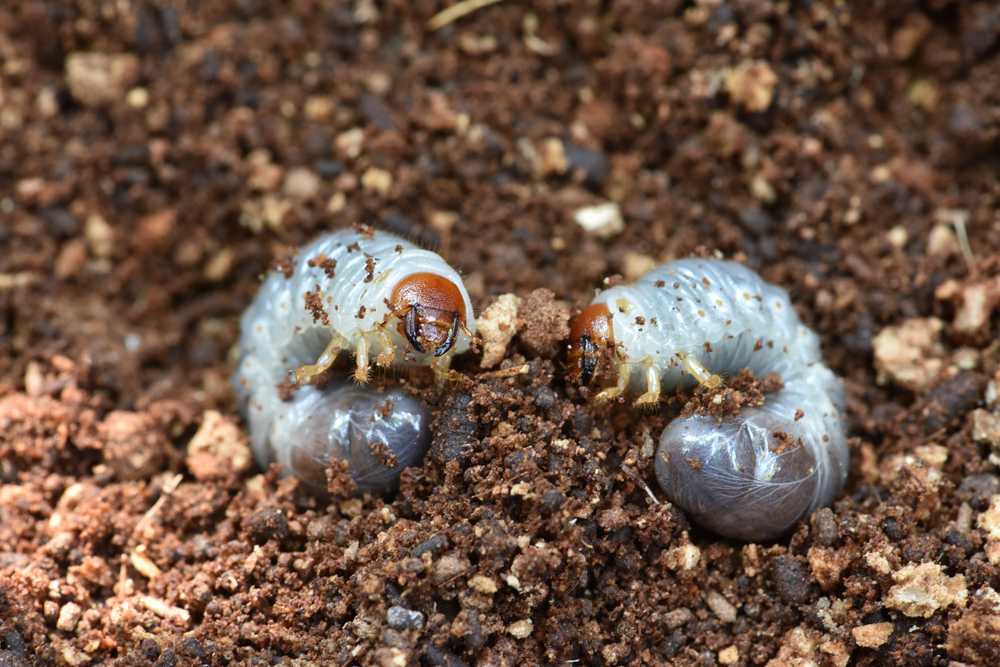
Spotting white larvae early allows for timely intervention. They have cream colored bodies and rusty orange heads, making them distinct. They are C-shaped, have slick and shiny bodies, and feature six legs at the front, making them easily distinguishable from other insects and lawn pests.
Unlike armyworms that become moths, these larvae transform into adult beetles. Recognizing their unique physical traits aids in early detection and control.
Signs of a Grub Worm Problem
Identifying signs of a grub worm infestation can prevent severe lawn damage. One of the most telling signs is the presence of dead patches or brown patches that peel back like a carpet, indicating that these larvae have severed the roots. Dying grass that can be easily pulled up by hand is another symptom of a grub problem.
Increased activity by other animals, such as digging by raccoons, skunks, and birds, is also a common indicator of an infestation. These animals feed on the larvae, and their presence can be a sign that you need to take action to control these pests in your lawn.
Checking for Larvae
Confirming presence involves a simple check. Pull a section of dead lawn to check if it’s loose. If it lifts easily, these larvae have likely damaged the roots.
These larvae possess a distinctive C-shape and a shiny appearance, with cream colored bodies and brown heads. A healthy lawn can typically tolerate up to five larvae per square foot without significant grub worm damage.
Counting the larvae helps determine the severity of infestation and the necessary actions to control grub worms.
Different Types of Grub Species
Understanding different types of these larvae aids in targeted grub worm control measures. These larvae, which are the immature stage of various beetles, feed on organic matter, including grass roots, and can remain as larvae for several months to several years. To effectively manage these pests, it is essential to know how to kill grub worms.
While in their larval stage, these pests cause significant lawn damage before becoming adult beetles. Identifying the specific larvae in your area aids in selecting effective control methods.
Japanese Beetle Grubs
Japanese beetle grubs are one of the most common and destructive types of lawn grubs. Identifiable by a V-shaped row of dark hairs on their last abdominal segment, they can grow up to 1 inch. The lifecycle of Japanese beetle grubs involves several stages, including egg laying by female beetles, feeding, overwintering, and pupation.
These larvae are notorious for grubs feeding on grass roots, leading to significant lawn damage. Controlling Japanese beetle grubs effectively prevents further lawn destruction.
June Beetles
June beetle larvae, commonly known as June bug grubs, spend a significant portion of their life cycle underground. These larvae are part of the scarab beetle family and are known for their damaging effects on lawns.
June beetle larvae cause brown patches and dying grass, similar to other grub species. Comprehending their lifecycle and behavior ensures effective pest control.
European Chafer Larvae
European chafer larvae are another common type of lawn grub that can cause notable grub worm damage by feeding on grass roots. These larvae undergo a stage below the soil’s surface, where they cause the most harm.
Controlling European chafer larvae is key to a healthy lawn. Their feeding leads to lawn patches, necessitating effective grub worm control measures.
Preventing Grub Worm Infestations
Preventing grub worms is key to a vibrant, healthy lawn. Female beetles lay their eggs in thin, sparse grass, so regular mowing and watering deter infestations. Routine care enhances lawn resilience against pests.
Healthy practices prevent these pests and enhance lawn aesthetics and functionality. Preventive measures are the first step in effective grub worm control.
Maintaining a Healthy Lawn
A healthy lawn is one of the best defenses against these pests. Deep watering strengthens grass roots, enhancing resistance. Thick grass is less attractive for beetles to lay their eggs.
Healthy lawns can tolerate a few larvae per square foot without visible damage. Experts offer comprehensive assessments to prevent future grub infestations.
Soil Management
Good soil health deters beetles from laying eggs. Beetles lay their eggs in thin, sparse grass, often due to poor soil health.
Deep watering promotes stronger grass roots, enhancing soil health. Proper soil management prevents infestations and maintains lawn health.
Effective Grub Worm Control Methods
Controlling lawn larvae is challenging as they reside in the soil, often rendering DIY methods ineffective. Effective methods exist to prevent further harm from these pests. These strategies can protect your plants and lawn. Opting for a service provides specialized techniques for effective management.
Expert services can manage grub infestations effectively, minimizing lawn damage. Control methods include chemical treatments, organic solutions, and integrated pest management.
Chemical Treatments
Chemical treatments offer one control option. Products like Bonide Insect & Grub Control disrupt the lifecycle of grub and insect problems. Curative insecticides like carbaryl and trichlorfon effectively kill spring or fall larvae.
Always read and follow insecticide label directions. Some pesticides may fail due to resistance, but Bonide offers up to three months of protection.
Organic Solutions
Organic solutions control these pests while minimizing chemical use and are effective against various grub species. Beneficial nematodes, using infectious bacteria, effectively control all species. Mix them with water and spray over the lawn, avoiding direct sunlight for best results.
Milky spore, a beneficial bacterium, controls Japanese beetle grubs by infecting and multiplying in the soil. Natural predators like birds and moles help manage populations, though they may disturb the lawn.
Integrated Pest Management (IPM)
Integrated Pest Management (IPM) uses various tactics to sustainably reduce pest populations. This approach involves maintaining a healthy lawn, using chemical and organic solutions, and other preventive measures. For those seeking pest control services in Florida, professional options are available.
IPM targets these larvae and other pests, ensuring a balanced, healthy lawn environment.
Professional Control Services
For infested lawns, expert services are highly recommended. Professionals ensure pest-free lawns through innovation and expert services.
Controlling these larvae is essential for maintaining a healthy and beautiful lawn. From understanding their lifecycle and identifying different species to implementing preventive measures and effective control methods, there are various strategies to keep your lawn pest-free.
Professional services offer expert knowledge and advanced treatments to ensure thorough control. By taking proactive steps and utilizing professional help, you can protect your lawn from the damaging effects of these pests.
Frequently Asked Questions
What are the signs of a grub worm infestation?
The signs primarily include brown patches in the lawn, easily pulled-up dying grass, and increased digging activity by animals such as raccoons, skunks, and birds. Addressing these signs promptly is crucial to prevent further lawn damage.
How can I check for larvae in my lawn?
To check, pull up a section of the dead grass to see if it feels loose. Then look for C-shaped worms with cream colored bodies and brown heads. This method will help you identify any infestation effectively.
What are some organic solutions for controlling these pests?
To effectively control them, consider utilizing beneficial nematodes, milky spore bacterium, and attracting natural predators such as birds and moles. These organic methods can help maintain a balanced ecosystem while managing populations.
Why should I hire professional pest control services for management?
Hiring professional pest control services ensures effective management through expert knowledge, advanced treatments, and ongoing support, ultimately maintaining a healthy lawn.
What is the lifecycle of grub worms?
The lifecycle consists of four stages: eggs hatch, larva, pupa, and adult beetles emerge, with the larval stage being particularly harmful. Understanding these stages is essential for effective management.
"*" indicates required fields
"*" indicates required fields