 Agents Available 24/7
Mud Dauber Wasps: Identification and Control Tips
Mud dauber wasps are solitary, non-aggressive insects that build distinctive mud nests. Learn how to identify them, understand their behavior, and manage their nests effectively.
- Mud dauber wasps are generally non-aggressive solitary wasps that play a vital role in controlling spider populations through their hunting behaviors.
- These wasps are identifiable by their slender bodies and characteristic mud nests, which female mud daubers meticulously construct to provide safe environments for their larvae.
- Effective management of mud dauber wasps includes preventive measures, such as sealing potential nesting sites and utilizing professional pest control services for mud dauber nest removal.
Understanding Mud Dauber Wasps
Mud dauber wasps are fascinating solitary wasps known for their unique nesting habits. Unlike the more aggressive paper wasps or yellow jackets, mud daubers rarely sting humans and typically live alone rather than in colonies. This solitary behavior makes them less intimidating than social wasps.
Despite their non-aggressive nature, caution is advised near mud dauber nests to avoid rare stings.
Common Species in the U.S.
Several species of mud dauber wasps inhabit the United States, each with unique traits and behaviors. The most common include the black and yellow mud dauber (Sceliphron caementarium), the organ pipe mud dauber (Trypoxylon politum), and the blue mud dauber (Chalybion zimmermani). The black and yellow mud dauber is well-known for its striking coloration and its role in notable incidents like the Birgenair Flight 301 crash.
The organ pipe mud daubers build nests resembling pipe organs, while blue mud daubers often appropriate abandoned nests from other species, modifying them as needed. Each species helps control spider populations, including black widow spiders.
Physical Characteristics
Mud dauber wasps are easily identified by their long, slender bodies with a thread-like waist, typically around 1 inch (25 mm) in length. The black and yellow mud dauber displays bold black and yellow markings, while the organ pipe mud dauber is mostly black and constructs distinctive pipe organ-shaped mud tubes.
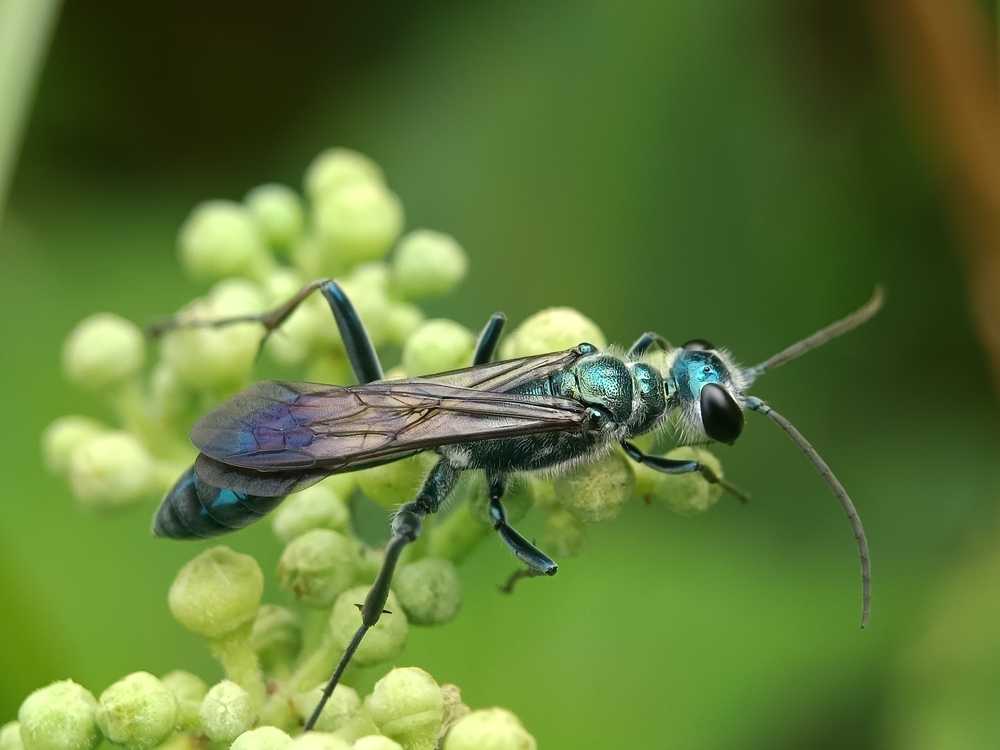
Blue mud daubers have metallic blue wings and a sleek body. Recognizing these features helps distinguish mud daubers from other wasps and insects.
Mud Dauber Nests
Mud dauber nests are architectural marvels made of mud, often found on building sides, rafters, bridges, and rock overhangs. The nests consist of mud tubes or cells where female mud daubers lay one egg per cell and stock them with paralyzed spiders as food for their larvae.
Nest Construction
Female mud daubers gather mud using their mandibles and build long, cylindrical mud tubes divided into individual cells. Each cell is provisioned with paralyzed spiders, such as crab spiders and black widow spiders, and sealed with mud. This careful construction ensures a safe environment for the developing larvae.
Preferred Nest Sites
Mud daubers prefer sheltered locations such as:
- Under eaves
- Porch ceilings
- Rock overhangs
- Corners of buildings
- Roof overhangs
- Undersides of decks or porches
Regular cleaning and sealing of cracks at these sites can deter mud daubers from nesting.
Abandoned Nests
Old mud dauber nests often attract other insects, including various wasp species and beetles. Removing abandoned nests promptly prevents reuse and helps maintain a pest-free environment.
Life Cycle of Mud Dauber Wasps
Mud dauber wasps undergo complete metamorphosis with four stages: egg, larva, pupa, and adult. Female mud daubers lay one egg per mud cell, provisioning each with paralyzed spiders.
The female mud dauber lays one egg on the first spider placed in each cell and seals the cell with mud. This ensures the egg has immediate access to food upon hatching.
After the egg hatches, the larva feeds on the paralyzed spiders stored in the cell. The larva develops fully before pupating inside the mud nest.
Adult mud daubers typically emerge the following spring, breaking out of the mud cells and beginning their search for food and mates.
Interaction with Other Insects
Mud daubers help control spider populations by hunting and paralyzing spiders for their nests. They commonly prey on crab spiders and black widow spiders, contributing to pest management around homes.
Abandoned mud dauber nests provide nesting sites for other insects, highlighting their role in the ecosystem.
Safety and Control Measures
Although mud daubers rarely sting, managing their nests is important when they build in undesirable locations. Spraying natural repellents like peppermint oil and regularly removing nests can prevent mud daubers from establishing nests. Sealing building cracks and gaps reduces potential nesting sites.
Mud Dauber Nest Removal
Safe mud dauber nest removal involves scraping away nests after wasps are inactive. For large or hard-to-reach nests, professional pest control services specializing in mud dauber nest removal are recommended.
Professional Pest Control Services
Professional pest control providers offer effective mud dauber management using safe techniques to prevent future infestations.
Mud dauber wasps are beneficial solitary wasps that help control spider populations, including black widow spiders. Understanding their behavior, lifecycle, and nesting habits allows for effective management and coexistence. Preventive measures and professional nest removal ensure a safe environment while respecting these fascinating insects’ ecological role.
Frequently Asked Questions
What do mud daubers eat?
Adult mud daubers feed on flower nectar and honeydew, while larvae consume paralyzed spiders stored in the nests.
Are mud daubers good to have around?
Yes, mud daubers help control spider populations and are generally non-aggressive.
Do mud daubers sting or bite humans?
Mud daubers rarely sting and only do so if provoked or handled roughly.
What are the most common species of mud dauber wasps found in the U.S.?
The black and yellow mud dauber, organ pipe mud dauber, and blue mud dauber are the most common species.
How do female mud daubers construct their nests?
Female mud daubers build nests by gathering mud to form long mud tubes divided into cells, laying one egg per cell, and provisioning each with paralyzed spiders for the larvae.
"*" indicates required fields
"*" indicates required fields