 Agents Available 24/7
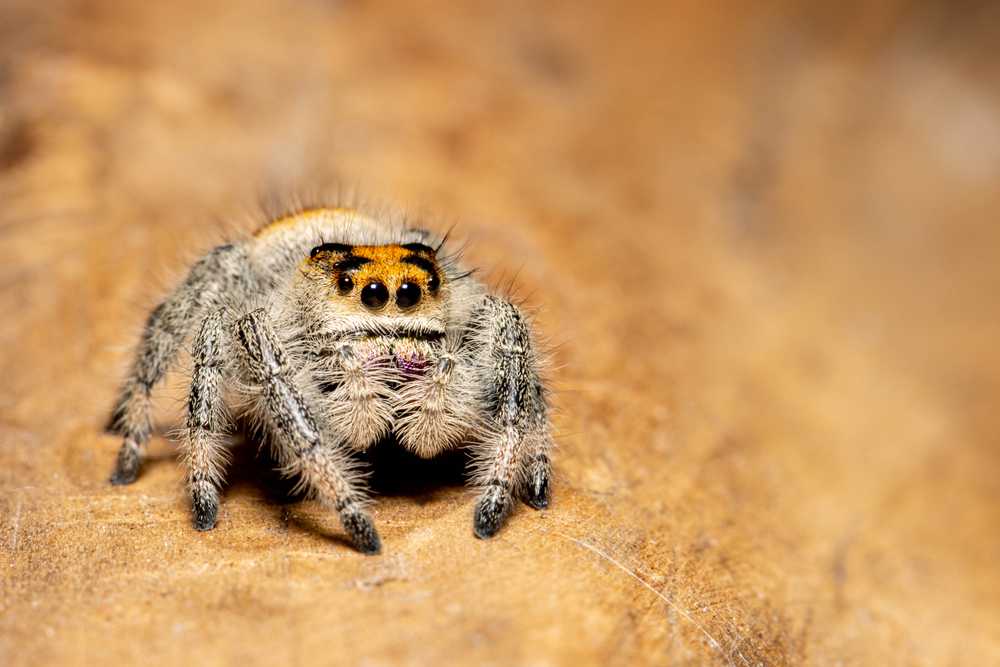
Guide to the Regal Jumping Spider: Phidippus regius
The regal jumping spider, or Phidippus regius, is a cute and fascinating arachnid known for its vibrant appearance and exceptional hunting skills. Predominantly found in eastern North America, especially the southeastern United States and the Caribbean, this spider’s striking colors and dynamic behaviors make it a favorite among enthusiasts and researchers. This guide provides comprehensive information about their identification, habitat, hunting techniques, care requirements, and common misconceptions.
- Phidippus regius, or the regal jumping spider, is a vibrant species native to eastern North America, recognized for its distinctive appearance and dynamic behavior.
- Key identification features include a unique eye arrangement with tiny eyes, iridescent chelicerae shimmering in green blue violet hues, and distinct sexual dimorphism, with males exhibiting brighter colors and alternating black and white fringes on the first pair of legs.
- Regal jumping spiders use silk for safety and nesting, possess advanced hunting techniques, and engage in elaborate courtship rituals, showcasing their adaptability and behavioral complexity.
The Regal Jumping Spider
Phidippus regius, commonly referred to as the regal jumping spider, stands out as a prominent species among jumping spiders. Found primarily in eastern North America, these spiders thrive in a variety of habitats, including open woodlands, palm fronds, and even around houses. Florida is a hotspot for their population, where they are often seen climbing plants and walls.
Adult males typically measure between 6 and 18 mm (0.24 to 0.71 inches), while females range from 7 to 22 mm (0.28 to 0.87 inches), making them one of the largest jumping spider species in their region. Their size, coupled with their distinctive, hairy bodies and iridescent chelicerae that shimmer in green, blue, and violet, adds to their allure. The abdomen of males often features striking patterns, while females may display gray, tan, or orange scales covering the black dorsal areas.
Identification Features
Identifying Phidippus regius involves noting several unique features that distinguish it from other spiders. Here are some key characteristics to watch for:
- Their eye arrangement is distinctive, with four pairs of eyes arranged in three rows, including tiny lateral eyes and a prominent first pair of large median eyes.
- They have hairy bodies with alternating black and white fringes on the first pair of legs, especially in males.
- Their chelicerae are iridescent, shimmering in green, blue, violet in males, and sometimes reddish or pinkish in females.
- The abdomen may show unique patterns or be covered with gray, tan, or orange scales in females.
These features help anyone interested in spiders, whether a casual observer or a dedicated researcher studying them, to accurately recognize the regal jumping spider.
Male vs Female Characteristics
The regal jumping spider exhibits distinct sexual dimorphism, making it relatively straightforward to differentiate between males and females. Males typically display brighter and more vibrant coloration, often with iridescent green blue violet chelicerae and alternating black and white fringes on the first pair of legs. Females tend to have more muted brown or tan tones, with gray or orange scale covers on their abdomen. Females are generally larger, reaching up to 2.5 cm, whereas males usually grow to about 1.5 cm. These differences not only aid in identification but also play a role in their mating behaviors.
Juvenile Identification
Identifying juvenile regal jumping spiders can be more challenging due to less pronounced features compared to adults. Juvenile males often exhibit more vibrant coloration and larger chelicerae, while juvenile females tend to have lighter, more muted colors. As they mature through their life cycle, juvenile females develop a scale cover as early as the third instar, while males retain stark black and white patterns. Recognizing these developmental changes helps us understand the life stages of these spiders.
Habitat and Behavior
The regal jumping spider thrives in diverse habitats, including:
- Open woodlands and fields
- Areas with abundant plants like palms and palmettoes
- Around houses and buildings, often seen climbing walls and posts
They build silken nests under bark or in spaces around houses, providing shelter and places for egg laying. These spiders prefer substrates with relatively flat surfaces, such as palm fronds or building walls.
Hunting Techniques
Regal jumping spiders are exceptional hunters, relying on their keen eyesight and powerful jumping abilities to catch prey. They use their large front eyes to spot insects from a distance, then leap to capture their target. Their agility allows them to catch prey much larger than themselves, including flies and crickets. They also use silk draglines as safety lines when jumping.
Silk Usage
Silk is crucial for regal jumping spiders. They use it to create draglines that prevent falls and to build silken nests for resting, molting, and egg laying. These nests are often found under bark or along palm fronds.
Courtship and Mating
Males perform elaborate courtship dances, displaying their iridescent chelicerae and leg fringes to attract females. These dances include leg waving and abdominal vibrations, which help females recognize and select mates. Mating often occurs inside silken nests, where tactile courtship behaviors complement visual displays.
Care and Feeding Guidelines
For those interested in keeping regal jumping spiders as pets, these spiders are cute, inquisitive, and relatively easy to care for. They require an enclosure with a secure door and good ventilation, sized appropriately for their growth—starting with 4x4x6 inches for juveniles and 6x6x10 inches for adults.
Maintain temperatures around 74°F and humidity at 75%, increasing to 85-90% during molting. Use natural substrates like coco coir mixed with sand, and include live moss or plants to help maintain humidity. Mist the enclosure lightly to provide water and spray to keep humidity.
Feeding Habits
Feed your regal jumping spider small insects such as fruit flies, mealworms, wax worms, and crickets. Young spiders should be fed 2-3 times weekly, while adults require feeding once or twice weekly. Offering a variety of feeders helps keep your spider healthy and interested.
Molting Precautions
Molting is a vulnerable time for your spider. Avoid disturbing or feeding it during this period. The spider will build a thick silken hammock and stop eating. Molting can take several hours to days, after which the spider’s new exoskeleton will be soft for a short time.
Life Cycle and Reproduction
Phidippus regius has a fascinating life cycle, living about one to two years in captivity. Females lay eggs in silken sacs under bark or in protected spaces around houses. Each sac can contain up to 300 eggs, and females guard them for several weeks.
Spiderlings hatch after their first molt, initially pale yellow before darkening. Juveniles go through several molts, developing distinct adult markings and sexual characteristics.
Common Misconceptions
Many people mistakenly believe regal jumping spiders are aggressive or dangerous. In reality, they are shy, non-aggressive, and pose no significant threat to humans. Their bites are rare and cause only minor discomfort.
While some spiders tolerate gentle handling, they should be treated with care and respect to avoid stress.
Interaction with Humans
Regal jumping spiders are harmless and can be fascinating to watch as pets or in the wild. Use gentle methods like a paintbrush or plastic straw to encourage them to move without harm. They often jump onto a person’s hand when approached calmly.
Professional Pest Control
If you need spider control around your home, professional pest control services are recommended. DIY methods like sprays or peppermint oil may provide temporary relief but are not long-term solutions.
The regal jumping spider, Phidippus regius, is a captivating and cute species with unique features, impressive hunting skills, and complex behaviors. Whether observed in nature or kept as pets, understanding their needs and habits enhances appreciation and promotes their conservation.
Frequently Asked Questions
How can I identify a regal jumping spider?
Look for their unique eye arrangement with tiny eyes, iridescent green blue violet chelicerae, hairy bodies with alternating black and white fringes on the first pair of legs, and distinctive abdomen patterns.
What do regal jumping spiders eat?
They eat small insects like fruit flies, mealworms, wax worms, and crickets. Feed young spiders 2-3 times a week and adults once or twice weekly.
How should I set up an enclosure for a regal jumping spider?
Use a well-ventilated, escape-proof enclosure with natural substrates like coco coir and sand, include live moss or plants, maintain temperature around 74°F, and humidity between 75-90%.
Are regal jumping spiders dangerous to humans?
No, they are non-aggressive and bites cause only minor discomfort if any.
What professional services are recommended for spider control?
Professional pest control services like PURCOR Pest Solutions provide thorough and safe spider management around your home and family.
"*" indicates required fields
"*" indicates required fields