 Agents Available 24/7
Top Tips for Dealing with Flying Termites in Your Home
Flying termites can indicate a serious termite problem in your home. These winged insects, also known as termite swarmers or alates, spread infestations that could lead to significant structural damage. In this article, you’ll learn how to spot flying termites, recognize signs of infestation, and take steps to protect your property.
- Flying termites, or alates, play a critical role in reproduction within termite colonies and are often mistaken for flying ants; proper identification is key to managing infestations.
- Signs of flying termite infestations include swarming termites, discarded wings, mud tubes, and wood damage; early detection is essential to prevent costly structural harm.
- Effective management of flying termites involves sealing entry points, using natural solutions like orange oil, and considering professional termite treatment services to safeguard properties.
What Are Flying Termites?
Flying termites, also called alates or reproductive termites, play a crucial role in the termite colony’s lifecycle. Unlike the wood-eating worker termites, these winged insects are primarily focused on reproduction. They emerge from their nests during warm, humid conditions, often mistaken for flying ants due to their similar appearance. However, identifying flying termites correctly is essential to address potential infestations effectively.
In a termite colony, flying termites can assume various roles, including king, queen, or swarmer. Despite their poor eyesight, they embark on mating flights during swarming season, shedding their wings once they find a suitable location to establish a new colony. Understanding these roles and behaviors is the first step in combating a flying termite infestation and protecting your home.
Identifying Flying Termites
Identifying flying termites can be challenging because they are frequently confused with winged ants.
Flying termites typically:
- Range in color from black to dark brown
- Measure between 0.25 and 0.375 inches in length
- Possess four translucent, equal-length wings
To differentiate flying termites from flying ants, look closely at their body shape and antennae. Here are the key differences:
- Antennae: Termites have straight antennae, while ants have bent antennae
- Body Shape: Termites have a straight, thick waist, whereas ants have a constricted waist
- Wings: Flying termites have four equal wings, whereas flying ants usually have unequal wing sizes
By observing these characteristics, you can accurately identify flying termites and take appropriate action to prevent infestations.
Behavior and Habits of Flying Termites
Flying termites, or swarmers, emerge during warm, humid conditions, usually triggered by rainfall in spring and early summer. These flying termite swarms are a natural part of their reproductive cycle, as they seek to mate and establish new colonies. The sight of termites swarming can be alarming, but it serves as a crucial warning sign of a nearby mature colony or an existing colony.
Swarming typically occurs during the daytime, and after mating, the male and female termites drop to the ground, losing their wings and searching for a suitable location to build a nest. This behavior indicates that a new termite colony is being established, which can lead to severe structural damage if not addressed promptly.
The presence of flying termites inside your home is particularly concerning, as it suggests that a mature colony is either in or very close to your property, possibly within crawl spaces or foundation walls. Recognizing these behaviors and habits is crucial to taking timely action to prevent a full-blown termite infestation.
Signs of a Flying Termite Infestation
Detecting a flying termite infestation early is key to preventing extensive damage to your home. The presence of swarmers inside your home indicates a potential active infestation in or under the building.
Early detection signs include:
- Swarming termites
- Discarded wings
- Mud tubes
- Wood damage or decaying wood
Each of these provides critical clues to identify and address the problem.
Discarded Wings
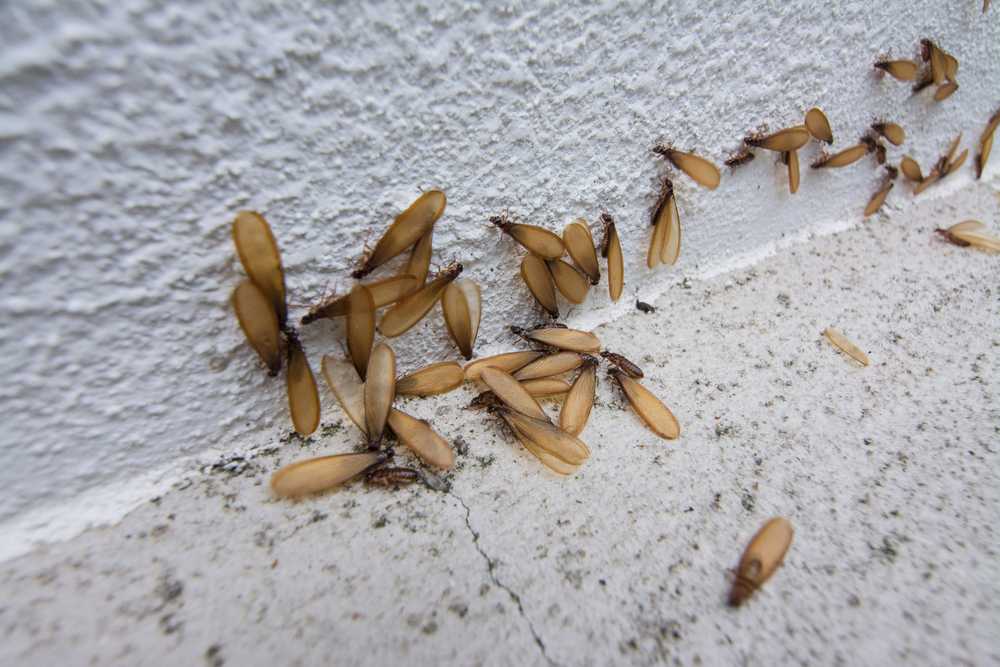
One of the most common signs of a flying termite infestation is finding discarded wings around your home. These wings are often found near entry points, windowsills, or the home’s exterior, indicating that a swarm has recently occurred. The presence of discarded wings is a telltale sign that winged termites have mated and shed their wings as they establish a new colony.
If you find discarded wings, it is crucial to act quickly. The presence of these wings suggests a nearby or existing colony. Look for these wings in areas where flying insects might enter your home, and take immediate steps to address the infestation before it worsens.
Mud Tubes
Mud tubes are another significant indicator of a flying termite infestation. These tubes are constructed by subterranean termites as protective tunnels, allowing them to travel between their colonies and food sources. Mud tubes are typically found in dark, damp areas such as basements, crawl spaces, and along foundation walls.
Discovering mud tubes is a major red flag and requires immediate attention. These structures indicate active termite activity and potential infestation. If you find mud tubes, it is essential to contact a professional pest control company to assess and manage the situation effectively.
Wood Damage
Termite damage to wood is a clear sign of an infestation. This damage often appears as hollowed-out or damaged wood, indicating that worker termites have been feeding on the cellulose within. Excess moisture in and around the home can attract termites, making it essential to manage moisture levels in and around your home.
Regular home inspections can identify vulnerable wooden structures at risk of termite damage. By recognizing and addressing wood damage early, homeowners can prevent further deterioration and protect their property from extensive termite-related destruction.
Risks Associated with Flying Termites
Ignoring the presence of flying termites can lead to severe structural damage and costly repairs. Termites feed on cellulose, weakening the structural integrity of homes over time. The longer a termite infestation goes untreated, the more significant the financial burden becomes, often necessitating extensive renovations and repairs.
Flying termites are indicators of a significant termite issue, and their presence should not be taken lightly. Allowing flying termites to mate and establish new colonies can result in millions of termites potentially infesting your home, leading to extensive property damage. Early detection and professional termite treatment are crucial to managing termite problems effectively and safeguarding your property.
Professional pest control services provide the expertise needed to manage termite infestations and minimize potential damage.
Effective Methods to Get Rid of Flying Termites
Eliminating flying termites requires a combination of extermination, preventive measures, and routine maintenance. There are several effective methods to get rid of flying termites, each targeting different aspects of the infestation. From sealing entry points to using natural solutions like orange oil and deploying bug zappers, these methods can help manage and eliminate termite populations.
In the following subsections, we will detail specific techniques to address flying termite infestations, providing practical steps to protect your home. By implementing these methods, homeowners can effectively reduce the risk of termite damage and prevent future infestations.
Seal Entry Points
Sealing entry points is crucial for preventing termites from entering your home. Use weatherstripping, silicone caulk, and insect mesh to effectively seal entry points around doors, windows, and foundation walls. Professional termite treatment methods include bait systems, termiticides, and entire-colony elimination systems.
By sealing entry points, homeowners can create a barrier that deters termites from invading their property. This preventive measure is an essential step in protecting your home from termite infestations and ensuring long-term structural integrity.
Use Orange Oil Solutions
Orange oil solutions are a natural method for killing termites and repelling them. The d-limonene in orange oil damages the exoskeleton of termites, leading to their death. This eco-friendly approach to termite control is an effective alternative to chemical pesticides, making it a popular choice for environmentally conscious homeowners.
Deploy Bug Zappers
Bug zappers can be placed outdoors to lure and eliminate flying termites, capitalizing on their attraction to light. By strategically positioning bug zappers around your property, especially during swarming season, you can reduce the population of flying termites and protect your home from potential infestations.
Apply Boric Acid
Boric acid is a powerful tool for exterminating flying termites. When applied around the yard and house entry points, boric acid blocks the digestive system of termites, causing starvation and dehydration. This method effectively kills existing termite colonies and provides long-term protection against future infestations.
Using borate wood treatments can also protect wood from termite damage for years. By incorporating boric acid into your termite control strategy, you can safeguard your home from these destructive pests and ensure lasting protection.
Preventing Future Flying Termite Infestations
Preventing future termite infestations involves a combination of measures, including sealing entry points, maintaining outdoor areas, and treating vulnerable wood surfaces. By implementing these preventive strategies, homeowners can reduce the risk of termite damage and protect their property from future infestations.
The following subsections will detail specific preventive measures, providing practical steps to keep your home termite-free. Regular inspections, maintaining outdoor areas, and treating wood surfaces are essential components of a comprehensive termite prevention plan.
Regular Inspections
Conducting regular inspections is crucial for early detection of termite infestations. Scheduling annual checks can reveal hidden signs of termite activity, allowing for early intervention and preventing extensive damage. Homeowners should adopt a routine inspection schedule to ensure their property remains termite-free.Homeowners should adopt a routine inspection schedule to ensure their property remains termite-free.
By detecting termite infestations early, homeowners can take proactive measures to address the problem and protect their investment. Regular termite inspection is an essential part of a comprehensive termite control strategy.
Maintain Outdoor Areas
Maintaining outdoor areas is vital to reducing the risk of termite infestations. Keep the yard clean by removing dead trees, leaves, and wood debris, and by clearing away standing water. Opting for termite-resistant landscaping materials, such as rubber mulch, cedar mulch, river rock, or pea gravel, can further deter flying termites.
By maintaining a well-kept yard, homeowners can create an environment that is less attractive to termites and reduce the likelihood of infestations, including those originating from a neighbor’s yard.
Treat Vulnerable Wood Surfaces
Treating vulnerable wood surfaces is an effective method to deny termites a food source. Products like Bora-care provide long-term protection for wood structures. Applying orange oil to surfaces like windowsills, doorposts, and skirting can help repel termites.
For targeting termite activity, orange oil should be sprayed close to the foundation’s base or wherever the home’s exterior touches the ground. These treatments remain effective for many years, providing lasting protection against termite damage.
Professional Pest Control
Dealing with flying termites requires a multifaceted approach, from identifying these pests to understanding their behavior, recognizing signs of infestation, and implementing effective eradication and prevention methods. By staying vigilant and taking proactive measures, homeowners can protect their properties from the destructive impact of termites.
Remember, early detection and professional intervention are crucial in managing termite infestations. By following the steps outlined in this blog post, you can safeguard your home and ensure long-term protection against flying termites.
Frequently Asked Questions
How can I differentiate flying termites from flying ants?
To differentiate flying termites from flying ants, look for straight antennae and equal-length wings in termites, while ants will have bent antennae and unequal wing sizes.
What are the main signs of a flying termite infestation?
The main signs of a flying termite infestation are discarded wings, mud tubes, and visible wood damage. If you notice these signs, it’s crucial to act promptly to prevent further damage.
How can I prevent future flying termite infestations?
To prevent future flying termite infestations, seal all entry points and maintain your outdoor areas while treating vulnerable wood surfaces to deter these pests effectively.
What should I do if I find mud tubes in my home?
If you find mud tubes in your home, contact a professional pest control company immediately to assess and manage the potential infestation. Prompt action is crucial to prevent further damage.
Why is early detection of flying termites important?
Early detection of flying termites is crucial as it enables timely intervention, preventing extensive damage and costly repairs. Acting quickly can save you significant financial loss and protect your property.
"*" indicates required fields
"*" indicates required fields