 Agents Available 24/7
Great Black Wasp: Identification, Behavior, and Control Tips
Great black wasps are large, black insects that many are curious about. This article will help you identify the great black wasp, understand its behavior, discover its habitats, and learn how to stay safe.
- Great black wasps are large, solitary wasps identifiable by their deep black color, smoky wings, and unique body structure, playing an important role as effective hunters and pollinators.
- They build underground nests where female wasps store paralyzed prey to nourish their larvae, undergoing a complete metamorphosis that includes egg, larval, pupal, and adult stages.
- While they possess stingers, great black wasps are not aggressive and rarely pose a danger to humans; they provide significant ecological benefits in pollination and pest control.
Identifying the Great Black Wasp
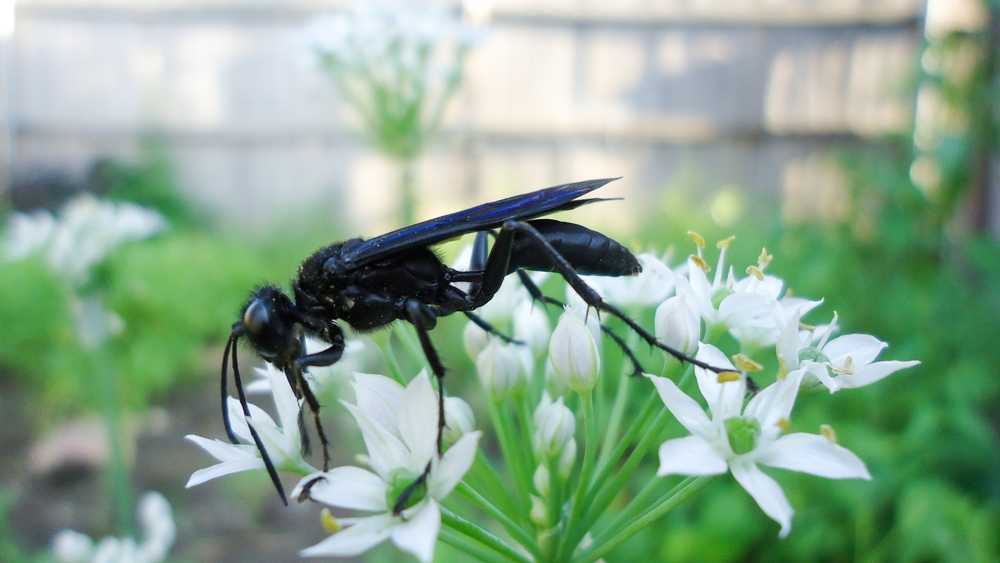
Great black wasps are hard to miss, given their impressive size and distinctive appearance. These black wasps measure approximately 0.87 to 1.1 inches in length, with some growing as large as nearly 1.5 inches. Their deep black coloration is complemented by large, smoky wings that exhibit a captivating blue iridescent glow. Unlike many other wasps, great black wasps have a narrow pinched waist that sets them apart.
This striking appearance is not just for show. The great black wasp’s large size and unique body structure make it an efficient hunter. Its powerful wings and robust build are perfectly adapted for capturing prey insects, which it uses to nourish its larvae. The absence of stripes or other markings further distinguishes these solitary wasps from other digger wasps and thread-waisted wasps, making identification easier for those familiar with their traits.
Recognizing great black wasps helps in understanding their ecological role, making it easier to appreciate their presence in gardens or meadows. Their habitat and nesting preferences reveal where you might encounter these impressive insects.
Habitat and Nesting Preferences
Great black wasps thrive in environments where prey is abundant. They are primarily found in meadows and gardens, where they have access to their favorite prey, such as grasshoppers and katydids. These areas provide the perfect hunting grounds for the adult females, who are responsible for capturing and paralyzing prey to feed their larvae.
These wasps prefer to build their nests underground, a common trait among digger wasps. The underground nest offers shelter and protection from the elements and predators. Female great black wasps create these nests by burrowing into the ground, where they construct chambers to store their paralyzed prey. Each chamber houses a single egg, which, upon hatching, will find a ready supply of food in the form of the paralyzed insect.
Knowing where great black wasps build their nests aids in effective management. While they predominantly prefer the ground, nests can also be found in sheltered locations like eaves and attics. This information helps in managing their presence to ensure safe coexistence.
The life cycle of these fascinating insects and their nesting habits play integral roles in their development.
Life Cycle of the Great Black Wasp
The great black wasp undergoes a complete metamorphosis, including four stages: egg, larva, pupa, and adult. This transformation is vital for their survival and ecological role.
Female great black wasps lay their eggs on paralyzed katydids or grasshoppers. The process begins with the female capturing and paralyzing the prey, which she then transports to her underground nest. She meticulously prepares egg chambers, each stocked with 2-6 paralyzed prey insects to provide a sufficient food supply for the developing larvae.
Once the eggs hatch, the larvae feed on the paralyzed prey provided by the female. This feeding period lasts about ten days, during which the larvae consume their prey’s body while it remains alive. This gruesome yet efficient feeding method ensures the larvae have a continuous supply of fresh food, crucial for their growth and development.
Following the larval stage, the larvae enter a pre-pupal state, where they remain dormant through the winter months. Pupation occurs in the spring, culminating in the emergence of adult wasps ready to continue the cycle. Understanding the behavior and diet of these wasps provides insight into their daily activities and interactions with the environment.
Behavior and Diet
The behavior and diet of great black wasps are as intriguing as their life cycle. Adult wasps primarily feed on nectar from flowers, which provides them with the necessary energy for their daily activities. This nectar-feeding behavior also makes them important pollinators, as they inadvertently collect and transfer pollen between plants.
Female great black wasps exhibit remarkable hunting skills. They capture several katydids or grasshoppers to provide food for their larvae once the eggs hatch. This prey capture is a critical part of their behavior, ensuring the survival of the next generation. Their hunting activities are mostly confined to the ground, where they can easily locate and capture their prey.
Insight into the diet and behavior of these wasps clarifies their interactions with humans and other species. Though their hunting activities may appear aggressive, they are crucial for reproductive success. Next, we explore the potential danger posed by great black wasps to humans.
Are Great Black Wasps Dangerous?
One of the most common questions about great black wasps is whether they pose a danger to humans. Despite their intimidating size and appearance, these solitary wasps are not known for aggressive behavior. Their solitary lifestyle means they do not defend their nests aggressively like social wasps or bees.
The intimidating name of great black wasps is derived from their size rather than their temperament. Males of the species lack stingers entirely, making them harmless to humans. While female wasps do have stingers, it is very rare for them to sting humans. However, if insect stings occur, the pain can be significant.
Knowing that great black wasps are not inherently dangerous can alleviate fears and misconceptions. Their ecological role in pollination and pest control offers significant benefits.
Benefits of Great Black Wasps
Great black wasps play vital ecological roles, primarily as pollinators and pest controllers. Their bodies are covered in fine hairs that assist in pollen collection, making them effective pollinators. As they gather nectar, they also inadvertently collect pollen on their bodies, assisting in the pollination of various plants.
These wasps often feed on the nectar of mountain mint and spotted horse mint, which are favorites among them. Approximately 75% of crops cultivated by humans rely on insect pollination, and wasps contribute significantly to this service. Some plants completely depend on wasps for their pollination, with specific species attracting male wasps by mimicking female pheromones.
Apart from pollination, great black wasps control pest populations by targeting harmful insects like flies and caterpillars, maintaining a balanced ecosystem. Managing their presence carefully ensures these benefits are maximized.
How to Manage Great Black Wasps
Effective management of great black wasps around your property ensures safety and reduces potential nuisances. While they are not aggressive, their presence can be unsettling. Identifying and managing their nests can help mitigate issues.
Professional pest control services are often the safest and most effective method for dealing with severe black wasp infestations. These professionals are trained to handle wasp nests and can provide long-term solutions to prevent future infestations.
If you encounter great black wasps at home, approach with caution. Avoid disturbing their nests and consider professional help for safety. Responsible management allows you to enjoy their ecological benefits without unnecessary risks.
The great black wasp is a remarkable insect that plays a crucial role in our environment. From its unique identification features to its beneficial ecological roles, understanding this solitary wasp can help us appreciate its presence and manage it responsibly.
By recognizing their habitats, life cycle, behavior, and the minimal risk they pose, we can coexist with these pollinators and pest controllers. Professional pest management services can help maintain this balance, ensuring safety and ecological harmony.
Frequently Asked Questions
Do black wasps sting?
Yes, female black wasps can sting, but such encounters are rare as they are solitary and typically do not sting unless threatened.
What attracts great black wasps?
Great black wasps are attracted to sweet scents such as fruit and flowers, with a particular fondness for clover, goldenrod, and milkweed. Additionally, they may be drawn to the odor of rotting cabbage, so it is advisable to use tightly sealed trash cans.
Are great black wasps rare?
Great black wasps are not rare; they are commonly found across most of the United States, particularly during the summer months when they patrol flowering plants.
How can I identify a great black wasp?
To identify a great black wasp, look for its large size (0.87 to 1.5 inches), deep black body, and smoky wings with a blue iridescent glow. Additionally, they have a narrow pinched waist and lack any stripes or markings.
Where do great black wasps build their nests?
Great black wasps typically construct their nests underground in meadows and gardens, favoring sheltered locations such as eaves and attics for added protection.
"*" indicates required fields
"*" indicates required fields