 Agents Available 24/7
Essential Insights on Cicada Killer Wasps
The cicada killer wasp stands out as a large, solitary insect that hunts cicadas and earns its reputation through its size and hunting style. Are they dangerous? How can you manage their nests effectively? This complete guide to cicada killer wasps presents all necessary information about their natural habits, life cycles, nesting patterns, and methods of control.
- Solitary wasps that build their nests in sandy, sunlit areas while controlling cicada populations through their large size and specific nesting behavior
- Female cicada killers paralyze cicadas to provide nutrients for their wasp larvae through their exceptional burrowing abilities in creating tunnels and nest cells
- Males show territorial behavior without possessing a stinger and cause lawn disruptions by creating unsightly mounds and displacing excess soil
- They do not represent a threat to humans and require proper monitoring, habitat management, and possible professional pest control
Cicada killer wasps look intimidating, but they rarely sting and usually avoid people. They become a problem mainly when nesting mounds disrupt lawns or flower beds.
Understanding Cicada Killer Wasps
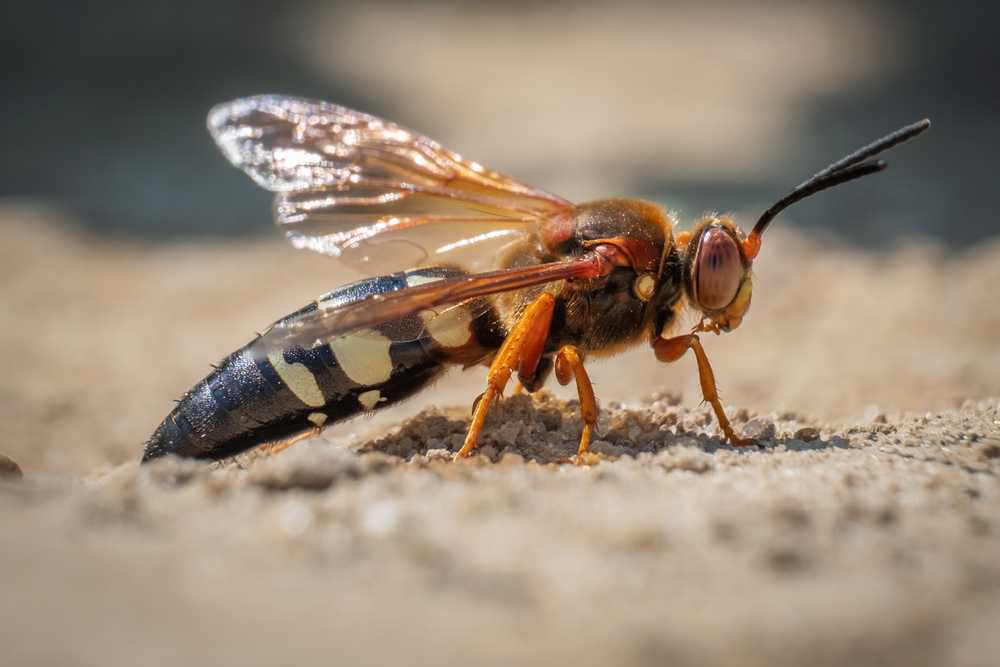
Cicada killer wasps (Sphecius speciosus) are among the largest wasp species inhabiting the eastern United States, reaching lengths of up to 1.5 inches. Their substantial black bodies bear distinct yellow patterns on the abdomen, together with amber-colored wings. Cicada killers possess distinct characteristics that set them apart from both giant hornets and sand hornets because of their appearance and behavioral patterns.
These wasps choose to establish their nests near cicada-infested trees in well-lit areas where they dig burrows into soft, sandy ground exposed to full sunlight. The genus Sphecius contains 21 cicada-killing wasp species worldwide, with North American species found east of the Rocky Mountains. The European hornet (Vespa crabro) is often mistaken for cicada killer wasps, although it differs in characteristics and appearance.
The wasps require loose, dry, sunlight-exposed soil to survive; thus, they populate gardens, lawns, flower beds, and open spaces. Cicada killers function independently as solitary wasps because each female maintains her own separate nest structure. This solitary nature is an essential element defining their life pattern and ecological role. Despite their large size, cicada killer wasps tend to avoid human contact. Knowledge of their natural environment and body characteristics helps recognize their important position in the ecosystem.
Life Cycle and Behavior
Cicada killer wasps complete their life cycle through pupation, after which adults emerge from late June to early July, remaining active until mid-September. The cicada killer larva spins a silken cocoon inside its nest cell during pupation. Larvae survive winter underground before entering the pupal stage in spring. Cicada killers dedicate several weeks of adult life to obtaining food, searching for mates, and building nests. Adult cicada killers feed on flower nectar and plant sap exudates, contributing to pollination.
A single female cicada killer catches more than 100 cicadas throughout her lifetime, naturally regulating cicada numbers. Each female prepares several cells in her nest by storing paralyzed cicadas before laying her female eggs inside. When the egg hatches, the larva feeds on the paralyzed cicada. Female and male cicada killers demonstrate different behaviors that enable the species to complete its life cycle. Male cicada killers establish territorial domains by flying around people and other insects during protective behaviors.
Female Cicada Killer Wasp Activities
Female cicada killer wasps show impressive abilities in both hunting and constructing nests. The solitary female wasps use their venom to immobilize cicadas, which they then carry to their underground nests. Females perform difficult work moving paralyzed prey that exceeds their body size by dragging it to trees or tall plants before flying to their burrows. After securing the prey, the female lays an egg below the cicada’s leg and seals the nest cell for the wasp larvae to feed on.
Females demonstrate expertise in excavation by digging burrows that reach lengths of more than 3 feet (over 40 inches). The secure nesting sites consist of underground burrows with several cells extending from the main tunnel. Female cicada killers dig separate tunnels that form large colonies of nests in suitable environments. Each nest cell contains one or more paralyzed cicadas to feed the cicada killer larva.
The female uses her hind legs, equipped with specialized spines, to push loose soil behind her as she digs, resulting in the formation of characteristic unsightly mounds at the tunnel entrances. Before adult cicada killers emerge in late June to early July, the larva spins a silken cocoon inside its nest cell during pupation. Only one generation occurs per year. The dedicated nesting behavior of female cicada killers plays a crucial role in controlling cicada populations in their ecosystem.
Male Cicada Killer Behavior
Male cicada killers exhibit different behaviors during mating activities. Males function as defensive protectors of their territory by aggressively patrolling nests and performing aerial attacks on perceived threats. Although male cicada killers appear threatening to humans and animals due to their aggressive actions, they cannot sting because they lack a stinger.
Males spend time on vegetation, keeping watch for potential threats or competitors. Territorial behavior allows males to secure mating opportunities and defend female nesting sites. Understanding the distinct behaviors and functions of male and female cicada killers leads to a complete understanding of their life cycle and ecological role.
Nesting Habits and Impact on Gardens
Cicada killer wasps build their nests as solitary individuals due to their independent behavior. Female cicada killers select nesting sites in dry, well-drained sandy soil exposed to full sunlight. They avoid wet soil conditions. Each female builds and manages her own nest without being part of a social colony.
The typical burrow is about 1.5 inches in diameter and reaches depths of 12 to 18 inches, sometimes extending as long as 40 inches. The burrow entrance is marked by a small pile of excess soil, forming unsightly mounds visible in gardens and lawns.
These mounds cause minimal damage to plant roots but can create instability, causing smaller plants to tip over or uproot, especially in flower beds where visual appeal is important. Cicada killer nests cause minor disruptions to gardens and lawns but do not pose a major threat to plant health. These wasps play a natural role in regulating cicada populations. Homeowners can manage their gardens effectively while coexisting peacefully with cicada killers by understanding their nesting activities.
Interaction with Humans and Safety
Cicada killer wasps behave peacefully toward people and avoid human interactions. These large wasps produce loud buzzing sounds that may startle humans, but they focus on their work rather than interacting with people. Human encounters with wasp stings are extremely rare since cicada killers only sting when touched or threatened.
Female cicada killers possess a sting used primarily for defense, while males display aggression through body language but lack any sting apparatus. This distinction reduces concerns about their presence.
The ecological function of cicada killers in managing cicada populations benefits the environment, and they do not harm pets. Safe coexistence is possible by maintaining a respectful distance and avoiding direct contact.
Educating the public about cicada killer wasps helps overcome misconceptions. Understanding their solitary behavior clarifies that they do not pose a threat to humans. The best way to avoid wasp stings is to keep a distance, as they only defend themselves when threatened. Their solitary nesting habits reduce the likelihood of mass stinging attacks, making them less dangerous than social bees and wasps.
Control and Prevention Tips
Effective control of cicada killers involves monitoring population levels, physical nest removal, and habitat management. Monitoring activity and population numbers helps track their presence. Population decreases when nests are removed by burying them with soil or pulling out soil mounds.
Large infestations require habitat modification, such as vegetation trimming and eliminating nesting sites. Maintaining a clean garden free of debris with trimmed grass deters cicada killers. Protective barrier plants can reduce nesting attraction.
Insecticidal dust applied at burrow entrances can control populations. Homeowners may use DIY methods like boric acid or boiling water instead of chemical pesticides.
When cicada killer wasps build nests near homes or infestations grow large, professional pest control services are recommended. Experts provide safe and effective management, preventing worsening situations and maintaining pest-free environments.
Additional Insights
Cicada killer wasps are large, easy to misidentify, and often misunderstood, but they are generally beneficial insects. They help control cicada populations naturally, which can reduce stress on trees and plants. Although they may look intimidating, cicada killers behave very differently from social wasps. They do not form aggressive colonies or defend nests as a group, which is why stings are uncommon and most encounters are harmless. Males may act territorial and fly close to people, but they cannot sting, and females typically sting only if handled or threatened.
Knowing their seasonal patterns can make management easier. Cicada killer activity usually peaks from early July through mid-September, and sightings often increase in sunny areas with loose, sandy soil. Their burrows can leave visible mounds and displaced soil, which may bother homeowners or affect flower beds, but the damage is usually cosmetic and does not threaten overall plant health.
Successful management focuses on practical steps rather than panic. Monitoring activity, reducing ideal nesting conditions, and addressing problem areas early can limit repeat nesting. If burrows appear near high-traffic spaces like patios, walkways, or play areas, or if activity becomes heavy year after year, targeted control or professional assistance may be the safest approach. With basic awareness and the right level of action, homeowners can reduce lawn disruption while still appreciating the ecological value these wasps provide.
Frequently Asked Questions
Are cicada killer wasps dangerous to humans?
Female cicada killer wasps can defend themselves with their sting, but males are stingless. Overall, these wasps pose no serious danger to humans.
How can I prevent cicada killer wasps from nesting in my garden?
Keep your garden clean by removing debris and trimming grass regularly. Planting barrier vegetation can also reduce nesting attraction.
What should I do if cicada killer wasp infestations become significant?
Contact a professional pest control service for safe and effective management.
Are there other cicada-killing wasp species in North America?
Yes, besides the eastern cicada killer wasp, North America has Sphecius convallis, Sphecius grandis, and Sphecius hogardii.
When is the best time to manage cicada killer wasps?
Evening hours are ideal, as wasps leave their nests then, making pest control safer and more effective.
"*" indicates required fields
"*" indicates required fields