 Agents Available 24/7
Top Tips on How to Get Rid of Carpenter Bees
Wondering how to get rid of carpenter bees? You’re not alone. Carpenter bees can severely damage wooden structures if not dealt with swiftly. This guide will help you identify these pests, inspect for infestations, and use various methods to eliminate them and prevent future invasions.
- Identify carpenter bees by their smooth, blackish-blue abdomens and the circular holes they create in wood for nesting.
- Prevent infestations by sealing wood surfaces, using traps, and engaging pest control services, especially before spring.
- Repair any existing damage from carpenter bees promptly and maintain regular inspections to ensure long-term protection.
Identifying Carpenter Bees
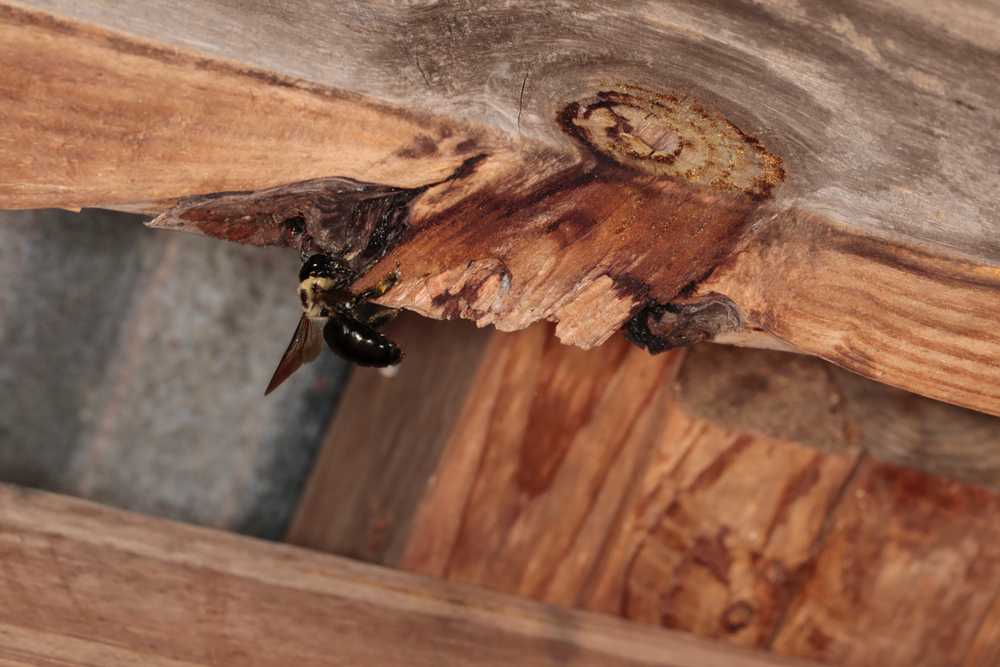
At first glance, carpenter bees might be mistaken for bumblebees, but a closer look reveals key differences. Unlike bumblebees, which have fuzzy, yellow-and-black bodies, carpenter bees boast smooth, blackish-blue abdomens. Female carpenter bees have solid black heads, while their male counterparts sport white markings on their heads.
If you hear faint buzzing during the day near wooden areas or notice increased bee activity around your deck or eaves, you might be dealing with carpenter bees. These insects are particularly drawn to wooden structures such as rafters, fascia boards, and siding, where they create small, circular openings known as carpenter bee holes. These holes are often accompanied by sawdust or wood shavings, clear indicators of an active carpenter bee infestation.
Identifying carpenter bees early is crucial for preventing extensive damage. Female carpenter bees are the ones boring holes to lay eggs, so spotting these industrious insects in action can help confirm your suspicions. Once you know what to look for, you can take the necessary steps to inspect and address the infestation.
Inspecting for Carpenter Bee Infestation
Inspecting for a carpenter bee infestation requires a keen eye and knowledge of their habits. Carpenter bees create nest holes that are typically around ½ inch in diameter and can extend several feet with branching tunnels. These circular holes are made in wooden surfaces to lay eggs, often resulting in significant structural damage if left unchecked, especially near active nests.
During your inspection, look for yellowish-brown stains around the entrance holes, which are caused by carpenter bee excrement. Additionally, the presence of sawdust or frass near wooden structures is a telltale sign that these bees are actively tunneling into the wood. Regularly checking areas like decks, eaves, and wooden siding can help you catch infestations early.
Finding these signs isn’t just about spotting the damage; it’s about understanding the extent of the infestation. Carpenter bee tunnels and nest tunnels can branch out and weaken the wood over time, leading to costly repairs. By regularly inspecting your wooden structures, you can identify and address infestations before they become severe, ensuring the longevity and safety of your property.
Preventative Measures in Early Spring
As spring approaches, taking preventative measures can save you from a carpenter bee headache later on. One effective strategy is to set up a carpenter bee trap, which lures these insects away from your home by mimicking potential nesting sites. Painting or sealing wood surfaces can also create a barrier that deters carpenter bees from burrowing into the wood.
Sealing gaps and applying paint or primer to untreated wood significantly reduces the likelihood of carpenter bees nesting on your property. Using borate-based treatments on wooden surfaces provides ongoing protection against these pests. Additionally, opting for hardwoods in outdoor construction can lower the chances of attracting carpenter bees, as they prefer softer woods like untreated pine.
Engaging a pest control service before the spring season can also be beneficial. Professionals can assess potential risks and implement preventative measures tailored to your property. By taking these steps early, you can enjoy peace of mind knowing your home is protected from carpenter bee invasions.
Natural Remedies to Repel Carpenter Bees
Natural remedies offer an eco-friendly way to keep carpenter bees at bay. Citrus scents, derived from fruits like lemon and orange, can effectively deter these pests when used in citrus spray. Similarly, almond oil can be mixed with water and sprayed around potential nesting areas to repel carpenter bees.
In addition to sprays, loud noises and vibrations can irritate carpenter bees, prompting them to leave their nests. Placing decoy wood, which is untreated, near a nest can attract carpenter bees away from your home. Hanging artificial wasp nests is another clever tactic, as carpenter bees are instinctively cautious of wasps and will avoid areas where they believe wasps are present.
These natural remedies can be highly effective in repelling carpenter bees, reducing the need for chemical solutions. By incorporating these methods, you can create an environment that is unwelcoming to carpenter bees while minimizing the impact on the ecosystem.
Using Chemical Solutions Safely
While natural remedies are great, sometimes chemical solutions are necessary to tackle stubborn carpenter bee infestations. Boric acid, when mixed in a solution of three parts water to one part acid, can be sprayed into entrance holes to eliminate carpenter bees. Aerosol carburetor cleaner is another option, making the bees’ nests unsafe for habitation and either killing the bees or driving them away.
It’s important to use insecticides before an issue arises to prevent carpenter bee infestations. Proper application of these chemical solutions is crucial for safety and effectiveness. Always follow the manufacturer’s instructions and take necessary precautions, such as wearing protective gear and ensuring the area is well-ventilated.
By using chemical solutions responsibly, you can effectively eliminate carpenter bees from your property while minimizing risks to your health and the environment. These methods can serve as a last resort when natural remedies and preventative measures aren’t enough to get rid of carpenter bees.
Repairing Carpenter Bee Damage
Repairing damage caused by carpenter bees is essential to maintaining the structural integrity of your wooden structures. Start by using steel wool, wood glue, and a wooden dowel to fill carpenter bee holes securely. For a more durable repair, combine materials like aluminum foil and wood glue to seal the holes.
Using 3/8-inch dowel rods can also be effective in filling carpenter bee holes. Ensure that the tunnels are filled completely to avoid letting moisture in, which can lead to further damage. Once the repairs are done, repainting the area can help prevent future infestations.
By addressing the damage promptly and thoroughly, you can protect your wooden structures from further harm. These repairs not only restore the appearance of your property but also reinforce its strength and durability against future carpenter bee invasions.
Professional Pest Control Services
When dealing with a severe carpenter bee infestation, professional pest control services are often the best solution. These companies offer expert pest control services designed to protect homes or businesses from unwanted pests. Professional exterminators provide targeted treatments that ensure effective removal and prevention of re-infestation.
Using Integrated Pest Management (IPM) strategies, professionals focus on treating the root of the infestation while minimizing risks to health and the environment.
By enlisting the help of experts, you can ensure that your carpenter bee problem is handled efficiently and safely. Professional services not only address the current infestation but also provide long-term solutions to keep your property pest-free.
Maintaining a Carpenter Bee-Free Environment
Maintaining a carpenter bee-free environment requires ongoing vigilance and care. Regular inspection and maintenance of wooden structures are essential to detect early signs of carpenter bee activity. After filling in the holes, it’s recommended to paint over the repairs to prevent future infestations.
In addition to repairs and inspections, adopting preventative measures such as using treated wood and setting up carpenter bee traps can help keep these pests at bay. By staying proactive, you can protect your property from the damaging effects of carpenter bees and enjoy a pest-free environment.
By following these maintenance practices, you can ensure that your wooden structures remain safe and sound. A little effort goes a long way in keeping carpenter bees from wreaking havoc on your home.
Dealing with carpenter bees requires a combination of identification, prevention, and remediation strategies. By understanding their behavior and taking proactive measures, you can protect your property from these destructive pests. Whether you choose natural remedies, chemical solutions, or enlist the help of professional pest control services, the key is to act promptly and effectively.
Remember, maintaining a carpenter bee-free environment is an ongoing process. Regular inspections, proper repairs, and preventative measures will ensure that your wooden structures remain intact and beautiful. Take charge of your pest control efforts and enjoy the peace of mind that comes with a carpenter bee-free home.
Frequently Asked Questions
How can I tell if I have a carpenter bee infestation?
You can identify a carpenter bee infestation by checking for small, circular holes in wooden structures, as well as sawdust or wood shavings nearby, and observing increased bee activity around your home. If you notice these signs, it’s important to take action promptly.
What are some natural remedies to repel carpenter bees?
Citrus sprays and almond oil are effective natural remedies for repelling carpenter bees, along with loud noises, decoy wood, and artificial wasp nests. Utilizing these methods can help keep your space free from these pests.
When should I use chemical solutions to get rid of carpenter bees?
You should use chemical solutions like boric acid and aerosol carburetor cleaner when natural remedies are not effective in managing carpenter bees; always prioritize safety by following the guidelines.
How do I repair damage caused by carpenter bees?
To effectively repair damage caused by carpenter bees, use steel wool, wood glue, and wooden dowels to fill and seal the holes completely, preventing moisture entry. This will ensure the integrity of your wood is restored and protected.
Why should I consider professional pest control services for a carpenter bee infestation?
You should consider professional pest control services for carpenter bee infestations because they provide targeted treatments and Integrated Pest Management strategies that ensure effective management and prevention of future issues.
"*" indicates required fields
"*" indicates required fields