 Agents Available 24/7
Paper Wasps: Identification, Nest Removal & Sting Prevention
Paper wasps, belonging to the genus Polistes, are slender insects known for creating distinctive paper-like nests. This article explains how to identify them, manage their nests, and prevent stings. You’ll also learn about their vital role in natural pest control.
- Paper wasps are beneficial insects that help control pest populations, especially caterpillars and beetle larvae, making them valuable allies in gardens.
- They build nests from wood fibers and saliva in sheltered locations such as under eaves, tree branches, and porch ceilings.
- Their colonies are semi-social, consisting of fertilized queens, sterile females (female workers), and males, with small colonies that build a new nest each spring.
- Safe nest removal and preventive measures are essential, with professional pest control services offering expert and environmentally responsible solutions.
Understanding Paper Wasps
Paper wasps (Polistes sp.) belong to the order Hymenoptera, which also includes bees and ants. These wasps have slender bodies, long legs, and two pairs of wings. They are less aggressive than yellowjackets and hornets but will defend their nests if disturbed.
With around 200 species worldwide and about 24 species in North America, several species of paper wasps are common in residential areas. The European paper wasp is one notable species, often found in the Northeast.
Identification Features of Paper Wasps
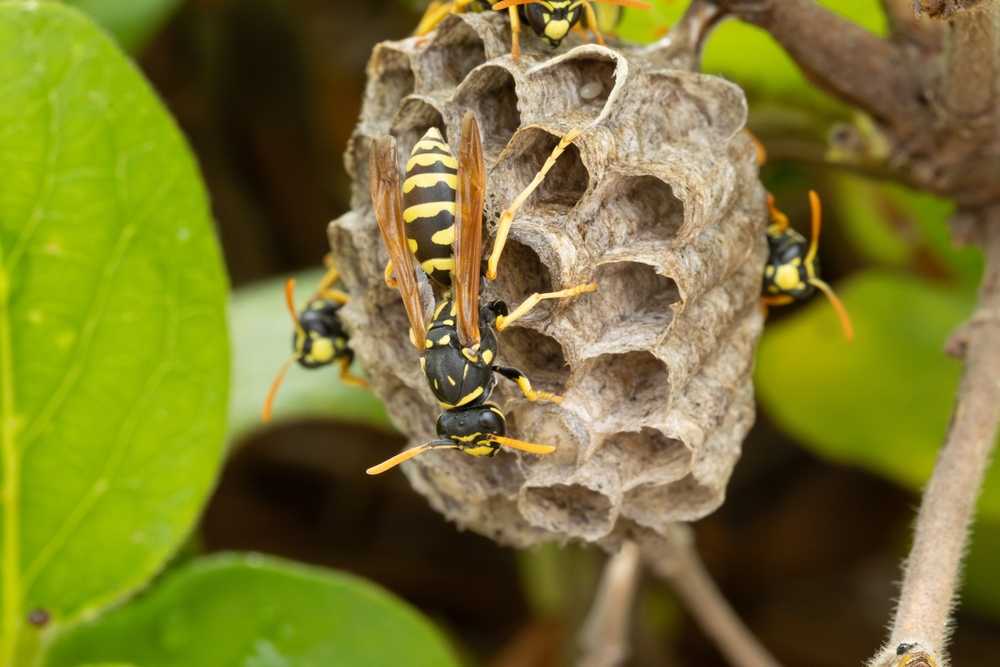
Paper wasps generally have elongated bodies with narrow waists and long legs that dangle during flight. Their coloration is mostly brown or black with yellow markings, sometimes with orange or reddish hues. They have antennae that help distinguish them from other wasps.
Recognizing these features aids safe identification and differentiation from similar stinging insects like yellow jackets and hornets.
Species of Paper Wasps in North America
North America hosts several species of paper wasps, including the Northern paper wasp and the European paper wasp. These species share common traits but vary slightly in color patterns and size. Additional species include umbrella wasps, which are closely related and sometimes considered under the genus Polistes.
Familiarity with local species supports a better understanding of their behavior and management.
Nest Construction and Habitat
Paper wasps build nests from a single layer of hexagonal cells made of paper-like material. This material is created by chewing wood fibers from tree bark and other sources, mixed with saliva.
Materials Used in Nest Construction
The paper-like material is crafted from wood fibers scraped from tree bark and other weathered wood, combined with saliva. This results in nests with no outer covering, unlike yellowjackets or hornets.
Nests are commonly found in sheltered locations such as under eaves, porch ceilings, tree branches, and crevices in buildings. These sites protect the colony from freezing weather and predators.
Understanding nest locations helps in early detection and management.
Behavior and Life Cycle
Paper wasps are semi-social insects living in small colonies. Fertilized queens overwinter in protected places and start new nests in spring. Female workers, which are sterile females, maintain the nest, feed larvae, and defend the colony.
Colony Structure and Roles
A typical colony includes fertilized queens, sterile females (female workers), and males. The queen is the sole egg-laying female, responsible for egg laying, while sterile females build the nest and forage for food sources like nectar, flies, and caterpillars. The colony builds through spring and summer, reaching maturity by late summer to late fall.
Seasonal Activity and Life Stages
The life cycle begins in spring with new queens building nests. Eggs hatch into larvae, which develop into adult wasps over several weeks. Males and new queens appear in late summer and fall. Fertilized queens then overwinter to start the cycle anew.
Benefits and Risks of Paper Wasps
Paper wasps are beneficial insects that naturally control pest populations by preying on caterpillars, beetle larvae, flies, and other insects harmful to plants. They also contribute to pollination by feeding on nectar.
Their role reduces the need for chemical pesticides, supporting garden health.
While paper wasps are generally less aggressive than yellowjackets or hornets, they will sting if disturbed or if their nest is threatened. Stings can cause allergic reactions, ranging from mild swelling to severe anaphylaxis.
Avoid disturbing nests and seek medical attention if allergic reactions occur.
Managing Paper Wasp Nests
Paper wasps perceive disturbances near their nests as threats and may become defensive. Recognizing signs of agitation can help avoid stings.
Wear protective clothing when removing nests. Use wasp sprays at night when wasps are less active. For high or hard-to-reach nests, tools like extendable poles with scrapers help maintain distance.
Natural removal methods include spraying a mixture of dish soap and water after sundown. For large or aggressive nests, professional pest control is recommended.
Prevention Tips
Inspect common nesting sites regularly, especially in late summer and early fall, to detect nests early. Seal cracks, crevices, and gaps around windows, doors, and vents to prevent wasps from entering structures and building nests.
Plant wasp-repellent plants such as eucalyptus, citronella, or mint near your home to deter paper wasps. Avoid planting flowering plants that attract wasps close to doorways or patios.
Professional Pest Control Services
Professional pest control services offer expert paper wasp management with environmentally responsible methods.
Paper wasps are semi-social beneficial insects that build single-layer paper nests in sheltered locations. Understanding their identification, life cycle, and behavior aids in safe coexistence. Regular inspections, sealing entry points, and professional pest control help prevent and manage nests, reducing the risk of stings while preserving their ecological benefits.
Frequently Asked Questions
How can I identify a paper wasp?
Look for slender, brown or black wasps with yellow markings, long legs that dangle in flight, and two pairs of wings. Their antennae and narrow waist are also distinctive.
What are common species of paper wasps in North America?
Several species exist, including the Northern paper wasp and the European paper wasp (Polistes sp.), with about 24 species recognized. Additional species such as umbrella wasps are also present.
What materials do paper wasps use to build their nests?
They use wood fibers scraped from tree bark and other weathered wood, mixed with saliva, forming a papery material without an outer covering.
How can I prevent paper wasps from nesting around my home?
Regularly inspect and remove small nests, seal entry points like cracks and crevices, and maintain your property to reduce attractive nesting sites.
When should I seek professional help for managing paper wasps?
If nests are large, aggressive, or located near human activity, or if you have allergies to stings, professional pest control services are recommended for safe removal and management.
"*" indicates required fields
"*" indicates required fields