 Agents Available 24/7
The Role of the Queen Ant: Facts, Lifespan & Colony Life
Queen ants are crucial for ant colonies. The queen lays eggs that sustain and grow the colony. This article explains their role, identification, life cycle, and challenges.
- The queen is vital for colony growth and reproduction, laying thousands to millions of eggs throughout her lifespan.
- Identifying the queen involves recognizing her larger size and unique thoracic structure, which distinguishes her from female worker ants.
- Eliminating the queen is essential for controlling ant infestations, as her absence halts reproduction and leads to colony decline.
The Queen’s Primary Role
She is the beating heart of her colony, serving as the primary reproductive force. Unlike female worker ants, whose duties include foraging and nest maintenance, her main responsibility is to lay eggs. This relentless reproduction ensures the continuous growth of the colony, with some queens capable of laying millions of eggs throughout their lifetime.
Her role is not just limited to egg-laying; she is effectively the mother of the entire colony. After mating and becoming successfully mated, she seeks out a suitable site to establish a new nest, where she will begin laying her first eggs to kickstart the colony’s growth. Her ability to reproduce daily is crucial for the colony’s survival and expansion.
Identifying the Queen
Identifying her in the midst of an ant colony can be a fascinating challenge. One of the most noticeable differences between her and female worker ants is size. She is generally larger, making her stand out among the smaller and more agile workers. This size difference is not just for show; it is a testament to her role as the colony’s reproductive powerhouse.
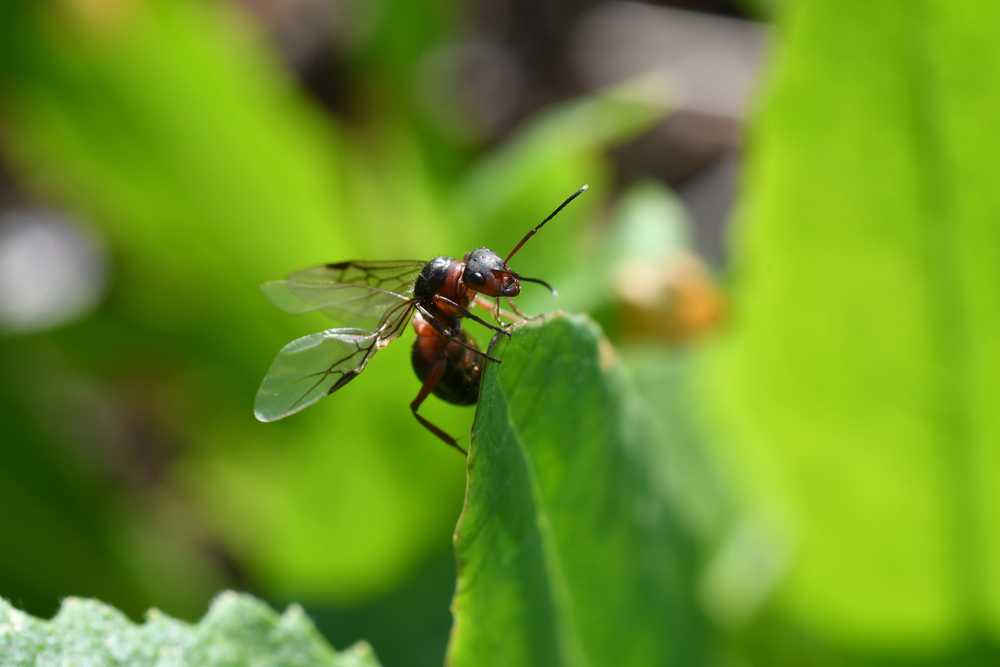
Another distinguishing feature is the thoracic structure. Designed for flight, her thorax houses larger wing muscles compared to worker ants, who are adapted for ground tasks. This difference in thoracic segments reflects her initial role in flying and dispersal before settling down to establish new colonies, including the emergence of winged male ants.
These characteristics make it easier to spot her within the bustling activity of the colony.
Life Cycle of the Queen
Her life cycle is a remarkable journey that begins with a mating flight. During this flight, winged female ants mate with winged male ants and subsequently shed their wings to establish a new nest. Once settled, she starts laying eggs, a process vital for the colony’s growth and sustainability.
Her longevity is another fascinating aspect. Under optimal conditions, some can live for several decades, far outliving their female worker ant counterparts, who typically live only a few weeks to a few months. This extended lifespan is crucial for maintaining the stability and growth of the colony over many years.
The life cycle stages of mating, egg-laying, and longevity collectively highlight her essential role in the colony’s success.
Mating and Establishing New Colonies
Her journey begins with a nuptial flight where she mates with winged male ants. After this crucial event, she sheds her wings, a significant transformation that marks the beginning of her role in establishing a new colony. She then remains hidden in her nest for several weeks, allowing her fertilized eggs to mature and the colony to start taking shape.
The successful mating is of utmost importance. Without her, the colony cannot reproduce, leading to its eventual collapse. Her presence ensures continuous reproduction, vital for the colony’s survival and growth. This dynamic showcases her indispensable role in the life cycle of the colony.
Egg Laying and Colony Growth
Once the nest is established, she begins the demanding task of laying eggs. Throughout her life, she can lay thousands, if not millions, of eggs, significantly contributing to the colony’s growth. These eggs hatch into larvae and pupae, which require constant care and feeding from female worker ants. This tireless cycle of egg-laying and nurturing is the backbone of the colony’s expansion.
In many species, the establishment of new colonies is achieved through a process called budding, where female worker ants assist in moving the queen and her eggs to a new site. This method ensures the continued growth and spread of the colony. Her prolific egg-laying is crucial for the survival and prosperity of the ant colony.
Lifespan and Longevity
Queens are known for their impressive longevity, with lifespans that can extend up to 30 years under optimal conditions. This is in stark contrast to female worker ants, which typically live only a few weeks to a few months. The extended lifespan allows oversight of the growth and stability of the colony over many years.
The ability to live for several decades plays a crucial role in the stability and growth of ant colonies. The long life ensures that the colony has a consistent reproductive force, which is essential for maintaining the population and ensuring ongoing success.
Social Structure and Hierarchy in Ant Colonies
Ant colonies are marvels of social organization, with a highly structured hierarchy that ensures the colony’s efficiency and survival. At the top of this hierarchy is the queen, whose primary role is reproduction. Below her are the female worker ants, which handle tasks like foraging, nest maintenance, and caring for the larvae.
Pheromones play a crucial role in maintaining this social order. The queen’s pheromones can inhibit other female ants from reproducing, ensuring she remains the sole egg-layer. These chemical signals help female worker ants recognize their own colony and maintain the intricate social structure that keeps the colony functioning smoothly.
Worker Ants and Their Duties
Female worker ants form the backbone of the colony, performing a variety of essential tasks that keep the colony running smoothly. These female ants take on duties such as feeding and protecting the larvae and pupae, building and maintaining the nest, and foraging for food.
As female worker ants age, their roles may shift from nest maintenance to more external tasks, like foraging. This division of labor ensures that all aspects of colony life are managed efficiently. Female worker ants also play a crucial role in caring for the queen, ensuring she is fed, cleaned, and protected.
Soldier Ants and Colony Defense
Soldier ants are the defenders of the colony, tasked with protecting it from predators and other threats. These ants are typically larger and more aggressive than female worker ants, making them well-suited for defense.
The primary role of soldier ants is to protect the queen and the rest of the colony from external dangers. Their aggressive nature and specialized physical traits make them formidable defenders, ensuring the colony’s survival against various threats.
Multiple Queens and Colony Dynamics
In some ant species, colonies can have more than one queen, adding a layer of complexity to their social structure. These multiple queens can share reproductive duties, which may enhance colony growth. The presence of more than one queen can also influence the social dynamics within the colony.
Having multiple queens can be advantageous, especially in harsh conditions, as it increases the chances of colony survival. However, it also introduces challenges, such as higher mortality rates during severe winters, particularly for new queens.
The dynamics of multiple-queen colonies highlight the adaptability and complexity of ant social structures.
Chemical Communication and Control
Chemical communication is the lifeblood of ant colonies, with pheromones playing a central role in regulating behavior and maintaining order. The queen produces specific pheromones that influence the activities of female worker ants, such as foraging and brood care. These pheromones are crucial for maintaining social cohesion within the colony.
Her chemical signals help prevent other female ants from reproducing, ensuring she remains the primary egg-layer. The removal of the queen can lead to disorganization, underscoring the importance of her chemical control.
Challenges Faced by the Queen
She faces numerous challenges throughout her life, from environmental pressures to maintaining reproductive roles. The death of the queen can have dire consequences for the colony, leading to a cessation of egg production and a decline in female worker ant populations.
The pressure to continuously produce fertilized and unfertilized eggs and maintain her position is immense. A single egg-laying queen bears the sole responsibility for the colony’s future, making her role both crucial and challenging.
These challenges highlight the delicate balance that must be maintained to ensure the colony’s survival.
Impact on Ecosystems
Queens play a pivotal role in their ecosystems, with their colonies acting as ecosystem engineers. Ant colonies contribute to soil health by creating tunnels that enhance drainage and aeration, benefiting plant growth. These activities demonstrate the significant ecological impact of ant colonies.
Moreover, queens influence local biodiversity by providing food sources and habitats for various other insects, birds, and microorganisms. Their colonies also play a role in predator-prey dynamics, serving as prey for numerous species while controlling pest populations.
The presence of queens and their colonies contributes to the stability and health of ecosystems.
Managing Ant Infestations
Effectively managing ant infestations requires a strategic approach, with eliminating the queen being a crucial step. Her role in reproduction means that without her, the colony cannot sustain itself and will eventually collapse. Professional pest control solutions, such as those offered by PURCOR Pest Solutions, are recommended for thorough and environmentally friendly approaches.
Professional pest control services ensure that ant infestations are managed effectively and sustainably.
Why Eliminating the Queen is Crucial
Eliminating the queen is a critical step in controlling ant infestations. As the primary egg-layer, she is essential for the colony’s growth and sustainability. Most female worker ants in a colony originate from a single queen, underscoring her importance in population maintenance. Without her, the colony cannot produce new workers, leading to its eventual decline.
Identifying and targeting the queen can be challenging due to her resemblance to other ants, but professional pest control services have the expertise to manage this task effectively.
Professional Pest Control
Professional pest control services are essential for effectively managing ant infestations. After resolving an infestation, professionals can assist with cleanup, particularly in areas like basements and crawlspaces. Their holistic approach ensures that your home or business is protected from pests with professional pest control services, and that any residual issues are addressed, providing peace of mind and a pest-free environment.
The queen is the linchpin of ant colonies, responsible for reproduction and the overall stability of her colony. Her ability to lay thousands to millions of eggs and extended lifespan make her indispensable to the colony’s success. Understanding her role, life cycle, and the social hierarchy of ant colonies provides insight into the complex world of these social insects.
From maintaining ecological balance to posing challenges in pest control, queen ants have a significant impact on their environments. Effective management of ant infestations hinges on eliminating them, and professional pest control services provide the expertise needed to handle these challenges. By appreciating the crucial role of queens, we gain a deeper understanding of the intricate and fascinating world of ant colonies.
Frequently Asked Questions
What is the primary role of a queen ant in a colony?
The primary role is to reproduce by laying eggs daily, which is crucial for the growth and sustainability of the colony.
How can you identify a queen ant within a colony?
You can identify her by her larger size compared to female worker ants and her well-developed thorax, which is adapted for flight. These characteristics clearly set her apart within the colony.
Why is eliminating the queen crucial in managing ant infestations?
Eliminating her is essential as she is the key to the colony’s survival, responsible for egg-laying and population maintenance. Without her, the ant colony cannot sustain itself and will ultimately decline.
What challenges do queen ants face?
She faces significant challenges such as environmental pressures and the continuous demand for egg production, as her death can jeopardize the entire colony’s survival.
How do queen ants impact their ecosystems?
Queens significantly impact their ecosystems by aerating soil, decomposing organic material, and influencing local biodiversity including other insects and birds. Their presence helps maintain ecological balance and supports various life forms within their habitats..
"*" indicates required fields
"*" indicates required fields