 Agents Available 24/7
Effective Ways to Manage and Control House Centipedes
Dealing with house centipedes? This article covers why they’re in your home, how to identify them, and the best ways to remove and prevent infestations. Get straightforward tips to reclaim your space from these fast-moving pests that originate from the Mediterranean region.
- House centipedes are nocturnal predators that thrive in dark, damp environments and primarily feed on smaller insects like carpet beetle larvae, cockroach nymphs, and other household pests.
- Signs of infestation include their presence in moist areas, daytime activity such as occasionally stopping suddenly and remaining absolutely motionless, and the discovery of molted skins or eggs.
- Effective management involves immediate removal, reducing food sources, sealing entry points such as cracks in concrete slabs and crawl spaces, and considering professional pest control
Understanding House Centipedes
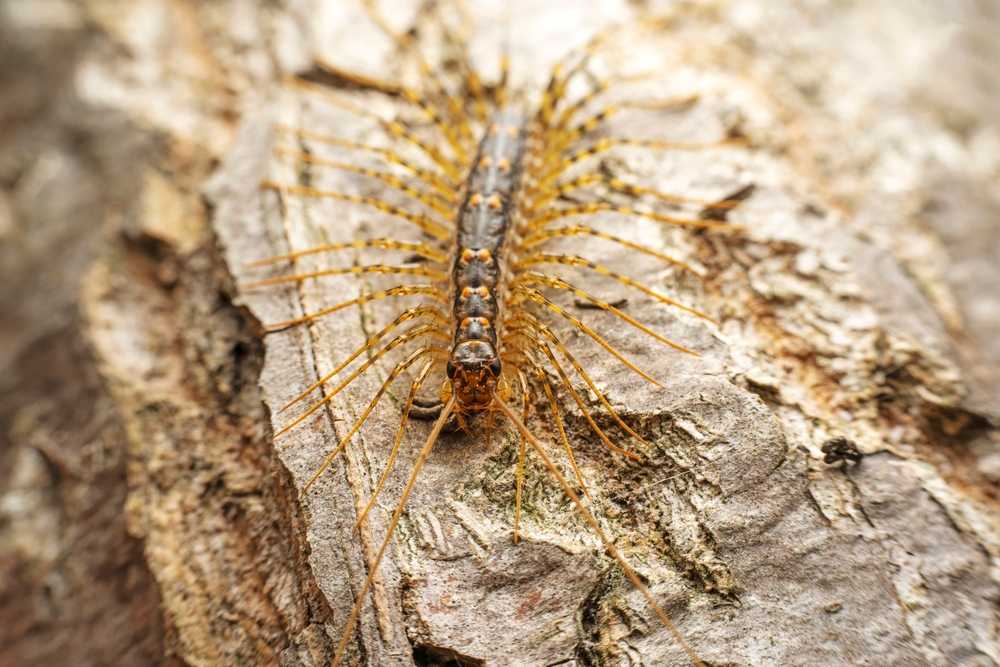
House centipedes, scientifically known as Scutigera coleoptrata, are fascinating yet unsettling creatures. Recognizable by their dirty yellow bodies adorned with three dark stripes running along their length, these centipedes grow to a body length of 1 to 1.5 inches, with their long legs extending their overall appearance to nearly 3 to 4 inches. The last pair of legs on adult females is notably longer, almost doubling the length of their bodies. Their segmented, flat bodies and numerous pairs of legs enable rapid movements, making them swift predators of household pests.
These nocturnal arthropods prefer dark, damp areas such as crawl spaces, basements, and bathrooms. They are incredibly fast, often darting directly across floors and walls with great speed, which can cause much consternation, particularly for women. Their remarkable speed and agility make them effective hunters of small insects and other arthropods, but also challenging to catch or kill.
Knowing their behavior and preferred habitats aids in managing their presence. House centipedes are most active at night, making encounters more likely during these hours. Their tendency to avoid light leads to their discovery in less frequented places like unexcavated areas, closets, and wall voids.
The Life Cycle of House Centipedes
The life cycle of a house centipede is marked by several molting stages before reaching adulthood. Newly hatched larvae possess four pairs of legs. These limbs aid in their movement and development. As they grow, they undergo a total of six molts, gaining a new pair of legs with each molt. After their first molt, young house centipedes gain an additional pair of legs, and by adulthood, they boast a full complement of 15 pairs of legs.
This molting process allows house centipedes to grow larger and more efficient in hunting their prey. Understanding this life cycle is vital for effective pest control, highlighting that removing adult centipedes alone isn’t enough.
The presence of young centipedes can signal a larger, ongoing infestation that requires comprehensive management strategies.
Why House Centipedes Enter Homes
Ever wondered why house centipedes make their way into your home? The main reason is food. House centipedes feed on smaller insects, and an abundance of these in your home can attract them. High humidity and the presence of prey like cockroach nymphs make your home inviting to centipedes.
Environmental factors such as changes in temperature or humidity can also drive centipedes indoors. During periods of high humidity or when seeking warmer environments, house centipedes might find your home an ideal refuge. They prefer to dwell in dark, damp areas during the day, which is why they are often found in basements, bathrooms, and under kitchen sinks.
Cracks in walls and damaged structures offer easy access for these creatures. Seasonal changes, especially in spring and fall, can increase centipede activity as they look for new habitats. Once inside, house centipedes can live their entire lives within your home, making it crucial to address any structural vulnerabilities to prevent their entry.
Common Prey for House Centipedes
House centipedes are voracious predators that help control household pests. Their diet includes a variety of insects and small arthropods. Their primary diet includes silverfish, firebrats, carpet beetle larvae, cockroach nymphs, and cockroaches. They also eat spiders and other small arthropods, using their speed and agility to hunt effectively.
In addition to the aforementioned pests, house centipedes also hunt flies, moths, crickets, and earwigs. An increase in pest activity, such as termites or roaches, can attract house centipedes as they seek food sources. By preying on these household pests, house centipedes play a role in maintaining a balanced indoor ecosystem, despite their unsettling appearance.
Are House Centipedes Dangerous?
A common concern is whether house centipedes are dangerous. Fortunately, they are generally harmless, as their venom isn’t potent enough to harm humans. While they can bite, it is rare for them to do so, and their bites usually result in only mild symptoms like localized pain, redness, and swelling similar to a bee sting.
House centipedes use their modified front legs to inject venom into prey like small insects and other arthropods. This venom immobilizes smaller creatures, not humans. In the unlikely event that a house centipede bite does occur, the symptoms are typically mild and short-lived, lasting for a day or two, similar to centipede stings.
However, if you experience more severe symptoms or suspect an allergic reaction, it is advisable to seek medical attention. Understanding that house centipedes are not a significant threat can help alleviate some of the fear and anxiety associated with their presence.
Signs of a House Centipede Infestation
Identifying the signs of a house centipede infestation is essential for timely intervention. A primary indicator is their presence in damp areas like bathrooms or basements. These centipedes prefer dark, moist environments and are often found in such locations.
Seeing house centipedes during the day, despite their nocturnal nature, is another sign. Their behavior may include occasionally stopping suddenly and remaining absolutely motionless, which can be alarming.
Finding dead centipedes can also suggest a larger, ongoing infestation. Discovering molted skins in hidden areas like closets or crawl spaces can indicate their presence. Finding small, round house centipede eggs in damp, secluded spots also signals an infestation.
How to Get Rid of House Centipedes
Tackling a house centipede infestation involves immediate removal and long-term control strategies. Immediate removal focuses on safely capturing or killing centipedes, while long-term strategies reduce their food sources and make your home less inviting.
Immediate Removal Methods
For immediate removal, effective methods include carefully capturing and relocating the centipede. Wearing gloves protects you during the process. Avoid squishing the centipede to prevent a mess; instead, use a jar or cup to trap and release it outside safely.
Their rapid movements make house centipedes challenging to catch. If capturing isn’t feasible, using an appropriate insecticide such as boric acid or diatomaceous earth can be effective. Always handle removal methods safely to prevent house centipedes and avoid accidents.
Long-term Control Strategies
Long-term control strategies aim to reduce the centipede population and prevent future infestations. Start by reducing their food sources, which include small insects and other arthropods. Insecticides like boric acid and diatomaceous earth in cracks and crevices can be effective.
Sealing cracks and crevices in your home’s structure, including concrete slabs and crawl spaces, prevents centipedes from entering. Using sticky traps can also help monitor and reduce their population. For tips on natural methods to deter spiders, check out our recommended guide.
Preventing Future Infestations
Preventing future infestations requires proactive measures. Sealing entry points with caulk and other sealants prevents access. Lowering humidity levels by using dehumidifiers and ensuring proper ventilation can also deter centipedes.
Regular leak inspections and ensuring functional plumbing keep potential damp areas in check. Maintaining cleanliness and decluttering reduces hiding places for house centipedes.
Using natural repellents like strong-scented essential oils can also help prevent centipedes.
Professional Pest Control Solutions
For major or persistent centipede problems, professional pest control solutions are highly recommended.
Understanding house centipedes, their life cycle, and reasons for entering homes can help in managing and preventing infestations. Immediate removal methods, combined with long-term control strategies, can effectively reduce the centipede population. Professional pest control services provide comprehensive solutions for persistent problems. By taking proactive measures, you can keep your home free from these unsettling yet fascinating arthropods.
Frequently Asked Questions
Are house centipedes dangerous to humans?
House centipedes are generally harmless to humans, as their venom is not potent enough to cause significant harm. Bites may result in mild symptoms such as localized pain, redness, and swelling similar to a bee sting.
What attracts house centipedes to my home?
House centipedes are drawn to homes due to the presence of small insects and high humidity levels, as well as environmental temperature fluctuations. Ensuring a drier environment and reducing insect populations can help deter them.
How can I prevent house centipedes from entering my home?
To effectively prevent house centipedes from entering your home, seal all entry points with caulk, maintain lower humidity levels, and keep your space clean and clutter-free. Regularly inspect for leaks and consider using natural repellents for added protection.
What are the signs of a house centipede infestation?
A house centipede infestation is indicated by sightings in damp areas, such as bathrooms or basements, as well as finding dead centipedes, molted skins, or eggs in secluded, moist spots. Prompt attention to these signs is advisable to manage the situation effectively.
When should I call a professional pest control service?
It is advisable to call a professional pest control service if you are experiencing a major infestation or a persistent centipede problem. Their expertise can provide effective long-term solutions.
"*" indicates required fields
"*" indicates required fields