 Agents Available 24/7
The Brown Widow Spider: Identification, Behavior, and Control Tips
Wondering how to identify a brown widow spider and whether it’s dangerous? This article details their distinctive markings, behavior, and effective control methods to help you manage any encounters with brown widows, a notable member of the genus Latrodectus.
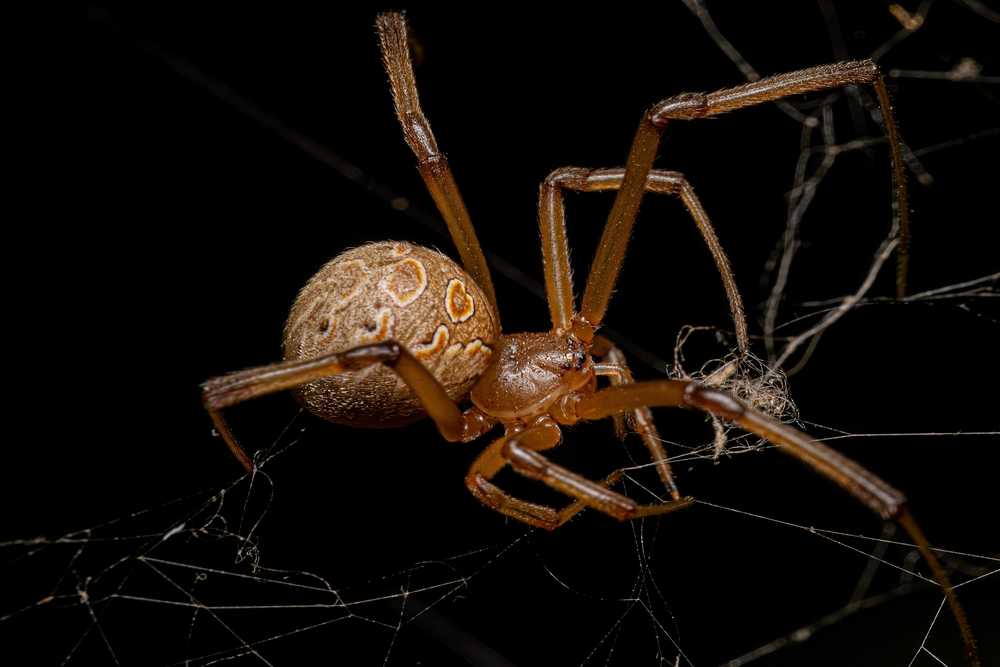
- Brown widow spiders (Latrodectus geometricus) can be identified by their mottled tan and brown coloration, a vivid orange or yellow hourglass marking on the abdomen, and distinctive spiky egg sacs unique among Latrodectus species.
- These theridiid spiders have adapted to urban environments. They prefer dark, low-traffic areas for web construction. This contributes to their widespread distribution across continents including the southern United States and parts of the Middle East.
- Effective management and control of brown widow spiders involve preventive measures such as reducing clutter and hiring professional pest control services like Purcor Pest Solutions. These experts specialize in managing venomous spiders and other venomous animals.
Identifying the Brown Widow Spider
Identifying brown widow spiders can be quite challenging due to their similar appearance to the more notorious black widow spiders, including the native western black widow and southern black widow species. Brown widow spiders typically exhibit a mottled coloration of tan and brown. This is a stark contrast to the solid black of their relatives. Their similar size to black widows adds to the identification challenge among other widow species.
The key to distinguishing brown widows lies in their unique markings and egg sacs. Unlike female black widows, which have a bright red hourglass on their undersides, brown widows feature an orange or yellow hourglass. Their egg sacs are also distinctive, sporting spiky structures that set them apart from other spider species and other Latrodectus spiders.
Recognizing these specific characteristics allows for accurate identification and effective management, especially in regions like San Diego counties and southern California where both species coexist.
Physical Characteristics
Brown widow spiders are known for their color variations, typically appearing in dark brown or tan with mottled patterns that include black markings. The most distinctive feature of these spiders is the vivid orange or yellow hourglass marking located on the underside of their abdomen. This is characteristic of the female brown widow spider.
This vivid marking is a crucial identifier. It differentiates them from the solid black appearance of black widow spiders, including the native western black widow and northern black widow species. Mature females are particularly notable for their size, which is comparable to that of black widows. This adds to the identification challenge of the black widow species.
Egg Sacs
The egg sacs of brown widow spiders are a key aspect of their reproductive process and are quite distinctive. These sacs have unique spiky structures extending from their surface. This makes them easily recognizable among cobweb spiders.
Found in sheltered areas, these egg sacs are an important indicator of brown widow presence. They can help in identifying infestations early on.
Habitat and Distribution
Brown widow spiders have adapted remarkably well to various environments, particularly urban areas. They are commonly found in coastal Southern California, including San Diego, and urban neighborhoods across the southern United States and southeastern United States. They thrive in places where they can easily construct their webs and find shelter. Human activities have significantly extended their distribution. This has allowed them to move beyond their original habitats in southern Africa and South America and establish themselves in new regions such as the Middle East.
Knowing their preferred habitats and global spread aids in effective management. Their preferred habitats and geographic distribution offer insights into their behavior and the best strategies for control.
Preferred Habitats
Brown widow spiders thrive in dark and low-traffic spaces where they can construct their webs undisturbed. Common locations for their webs include secluded areas under furniture, within empty containers, and around garages and outdoor furniture.
These spiders prefer locations that offer protection from predators. They often select sheltered and concealed areas around homes. Identifying these preferred habitats can help in locating and controlling brown widow populations.
Geographic Spread
The geographic spread of brown widow spiders is extensive. These arachnids are now found on every continent except Antarctica. In North America, their range has extended significantly since their first sighting. They have moved from Florida to as far north as Connecticut and westward to California, including San Diego counties. This wide distribution is largely due to human activities, particularly urban development, which has facilitated their spread.
Originally believed to have originated in southern Africa or South America, brown widow spiders have established populations in diverse regions globally, including Hawaii, Australia, and the Middle East.
Behavior and Web Construction
The behavior and web construction habits of brown widow spiders are fascinating and play a crucial role in their survival and interaction with humans. These theridiid spiders create irregular, tangled webs that typically feature a retreat area for hiding. Interestingly, brown widows exhibit aggressive behavior towards black widows. They actively seek to eliminate them from their vicinity. This may impact native western black widow populations.
Managing the presence of brown widow spiders involves understanding their web characteristics and interaction with humans. Keeping your home well-lit and regularly sweeping and vacuuming can deter them from nesting indoors.
Web Characteristics
Brown widow spiders construct webs that are asymmetrical and irregular. They often contain a few strands of silk that are less dense compared to those of black widow webs. These webs typically have a distinctive structure that sets them apart from other spiders. This makes it easier to identify their presence.
The unique construction of their webs is a critical factor in managing and controlling brown widow populations.
Interaction with Humans
Brown widow spiders often build their webs in more exposed areas. This increases the likelihood of human encounters. The primary cause of brown widow bites to humans is accidental trapping against the skin.
Despite their venomous nature, brown widow spiders are considered one of the least hazardous widow species. This results in fewer serious incidents compared to black widow bites. Recognizing these interactions helps in preventing unwanted encounters.
Venom and Medical Importance
When it comes to venom and medical importance, the brown widow spider’s venom is less potent than that of the black widow. However, it can still lead to moderate symptoms that require medical attention.
Knowing the differences in venom toxicity and bite symptoms ensures effective treatment and management.
Venom Toxicity
Brown widow spider venom is similar in toxicity to black widow venom but is delivered in smaller quantities. This makes it less potent overall. The differences in venom potency influence the severity of symptoms and the medical importance of bites from these two spider species.
While brown widow venom contains less potent neurotoxins compared to black widow spiders, it is still essential to treat bites with caution.
Symptoms of Bites
Common symptoms of a brown widow bite include localized pain and a red spot around the bite area. Severe cases can lead to symptoms such as muscle pain, cramps, nausea, and elevated body temperature.
Brown widow spiders are generally non-aggressive. Bites usually occur when individuals unintentionally come into contact with them. Monitoring symptoms and seeking medical attention if they worsen is crucial.
Natural Predators and Threats
Brown widow spiders face predation from various birds, lizards, and other spiders. These natural predators play a significant role in regulating brown widow populations. The combined predation pressure from these animals impacts the population dynamics of brown widow spiders. This makes it an essential factor in their control.
Primary Predators
Birds and mud dauber wasps are significant predators of brown widow spiders. Mud dauber wasps, in particular, are notable for preying on brown widow spiders and provisioning their nests with them.
Birds and wasps exert significant predation pressure, impacting brown widow spider populations.
Competition with Other Species
Brown widows can compete with native species like the native western black widow and southern black widow. This influences their local populations. This competition can impact the presence and prevalence of brown widows in certain areas. It is an important consideration in their management and a subject of invasive species research.
Prevention and Control Methods
Effective prevention and control methods are crucial for maintaining a safe home environment free from brown widow spiders. Preventive measures like decluttering and sealing entry points decrease the chances of brown widow spiders taking residence.
Reducing Clutter
Reducing clutter is a preventative measure that can help reduce brown widow spider populations by eliminating potential hiding spots. Organizing storage areas can significantly lessen the likelihood of spider infestations. Organizing storage areas can significantly lessen the likelihood of spider infestations.
Opt for plastic containers over cardboard to reduce spider habitats.
Professional Pest Control
Hiring pest control professionals effectively addresses persistent brown widow spider problems. Hiring professionals can provide systematic approaches to manage spider populations effectively. Professional pest control services should always be suggested.
Understanding the identification, behavior, and control of brown widow spiders is essential for maintaining a safe and comfortable home environment. These spiders, while less dangerous than their black widow relatives, still pose risks that require attention. By implementing effective prevention and control methods and utilizing professional pest control services, you can ensure a spider-free home. Remember, early identification and proactive measures are key to managing spider populations.
Frequently Asked Questions
Are Brown Recluse and brown widow the same?
The brown recluse and the brown widow are not the same; they can be distinguished by their coloration and markings, with the brown recluse featuring a violin-shaped mark and a tan hue, while the brown widow has a brown coloration with a large abdomen and red markings underneath. It is crucial to recognize these differences to avoid confusion.
How can I identify a brown widow spider?
You can identify a brown widow spider by its mottled tan and brown coloration, along with the distinctive vivid orange or yellow hourglass marking on its abdomen’s underside. These features are key in distinguishing them from other spider species.
Where are brown widow spiders commonly found?
Brown widow spiders are commonly found in coastal Southern California, including San Diego counties, and urban neighborhoods across the southern United States and southeastern United States, favoring dark, low-traffic areas like garages and under furniture.
How dangerous are brown widow spider bites?
Brown widow spider bites are generally less dangerous than those of black widows, yet they can cause moderate symptoms such as localized pain, muscle cramps, and nausea. It is advisable to seek medical attention if symptoms worsen.
What are the primary predators of brown widow spiders?
Brown widow spiders are primarily preyed upon by birds and mud dauber wasps, which play a crucial role in regulating their populations.ns.
"*" indicates required fields
"*" indicates required fields